Overview
Commercial, health care and roadside construction in Arcadia and east Edmond, planned around Arcadia Lake drainage, clay soils and utility extensions.
Project Details
Category
Area
- Edmond and the Oklahoma City metro
Next step
Service Areas
General Contractor in Arcadia and East Edmond
Building near a flood-control lake means the drainage plan is the first drawing we ask to see. East of I-35, Arcadia Lake covers 1,820 acres with about 26 miles of shoreline, and it was created in 1984 by an earthen dam on the Deep Fork River, built by the City of Edmond and the U.S. Army Corps of Engineers to control floods in the Deep Fork River Basin. For owners with land in east Edmond and Arcadia, that fact shapes everything from pad elevations to detention ponds to the way we sequence grading in wet seasons.
We build roadside commercial, small health care and behavioral health buildings, event and hospitality spaces, and light industrial and storage facilities in this part of the metro. The land is more open than central Edmond, which means larger sites, fewer neighbors and, often, longer utility extensions. It also means the owner pays closer attention to who maintains the road, the water and the sewer.
Drainage, soils and lake-adjacent sites
Sites close to a lake or creek corridor need a clear read of floodplain maps, soil bearing and groundwater before design is final. We ask the owner's civil engineer for a drainage report early and recommend a geotechnical investigation on every building site, because clay soils common in central Oklahoma swell and shrink with moisture. Foundation recommendations may call for drilled piers, post-tensioned slabs or deeper footings, and the cost difference between those options can be large.
Wet-weather earthwork is a schedule risk. We stage grading in sections so that no more ground is exposed than we can stabilize before a storm, and we maintain erosion controls through the job. The trade partners for mass grading and deep drilled pier foundations are the ones who tackle those conditions.
Route 66, I-35 and the roadside economy
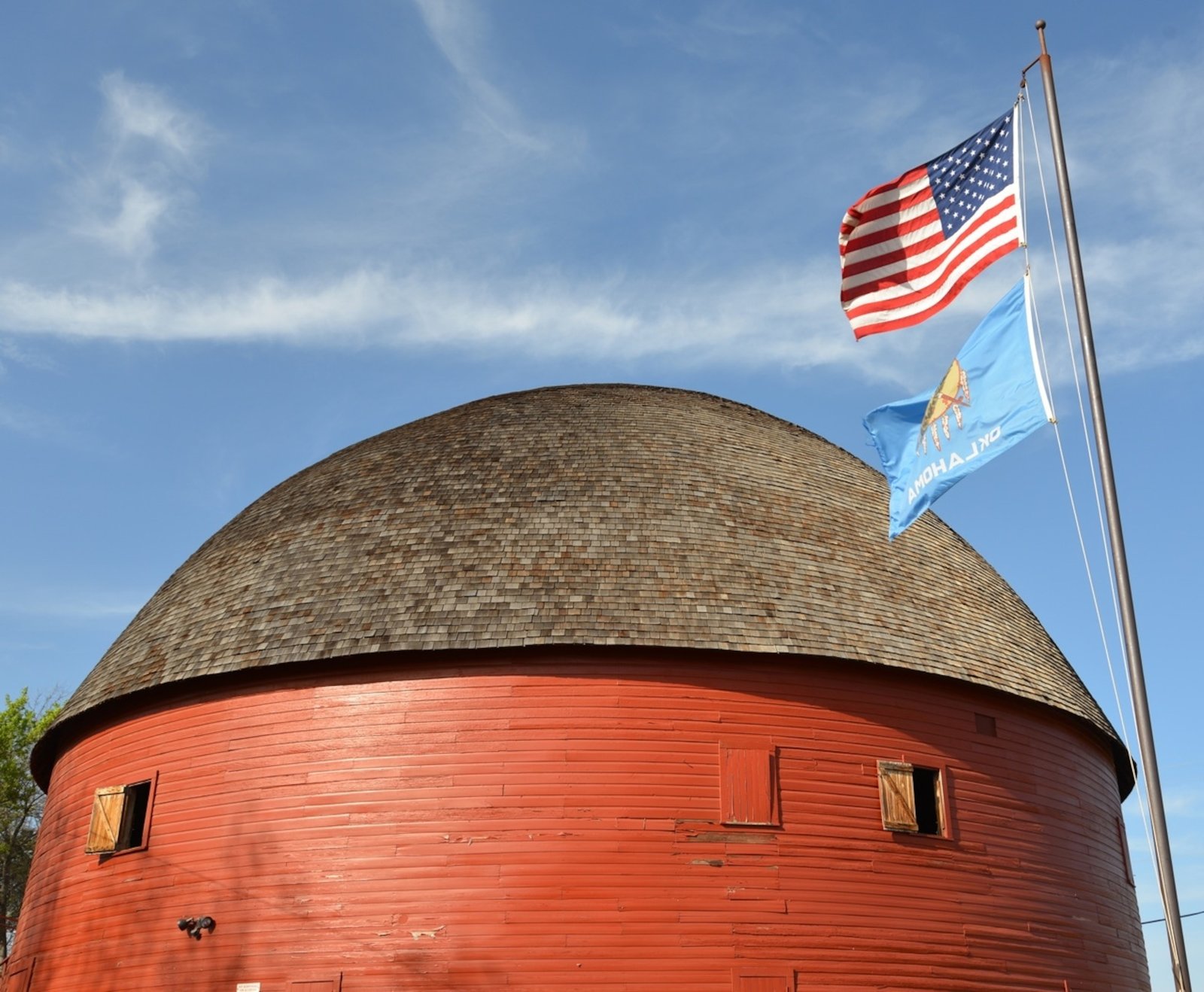
Route 66 was aligned through the town of Arcadia in the 1920s and passed next to the Arcadia Round Barn, which is listed under the Route 66 in Oklahoma Multiple Property Submission. The round barn at 107 Highway 66 was built in 1898, its roof collapsed in 1988, volunteers completed restoration in 1992, and it was added to the National Register of Historic Places in 1977. For a contractor, the interesting point is the continuing roadside economy: travelers still stop here, and businesses that serve them, such as cafes, shops and event spaces, are viable projects.
Because historic structures sit nearby, owners sometimes ask us about compatible design and about the impact of construction vibration and dust. We do not work on the barn and make no claim to, but we do take care with adjacent sites, with pre-construction surveys and with vibration limits for heavy equipment.
Health care and small commercial
A Journal Record article from 2019 reported that an addiction treatment center, Integris Arcadia Trails, was to open later that year along Edmond's I-35 corridor. Behavioral and outpatient facilities have their own construction needs: ligature-resistant fixtures, controlled entries, secure outdoor spaces and quiet, residential-feeling interiors. We coordinate with licensing and fire authorities early because those requirements shape the plan.
Operators in the healthcare systems world often evaluate several sites at once, and we give them comparable budgets for each. The trade partner team for healthcare construction builds these projects with infection control, mechanical commissioning and life-safety review built into the schedule. For smaller sites, commercial construction with metal-framed shells or masonry can deliver a finished building quickly when drawings are complete.
Lake-adjacent land also draws event barns, cafes, overnight cabins and storage yards for boats and recreational vehicles. Each has a different code category, and each can be a good fit if the owner understands the approvals at the start. A boat storage building is a simple metal structure but may need stormwater treatment, while an event venue needs assembly occupancy egress, restrooms sized to the crowd and parking that meets the city's standards. We give owners a one-page comparison of cost, schedule and approvals for the uses they are considering so they can choose before the design fee is spent.
Utilities on larger parcels
Larger parcels often need water, sewer and power extended from the nearest connection. Cost and schedule depend on distance, easements and which agency or utility owns the line. We ask for utility availability letters before the owner closes on land, and we price extensions as separate line items. Edmond Electric, a publicly owned power company, serves the city, and we coordinate service requests early because transformer lead times are often the longest item.
Septic or lift-station solutions may come into play where gravity sewer is not available, and those require state and county approvals that can add months. We tell owners about that risk before the purchase, not after it.
Codes, floodplain and storm design
The City of Edmond adopted the 2018 ICC family of codes and a local ordinance on storm shelters, and the state has newer code editions in effect from September 14, 2026. We confirm which edition applies before design. Floodplain development permits, when required, add a separate review with elevation certificates, and they can influence where the building sits on the site.
For event and hospitality uses near the lake, assembly occupancies require egress, occupant load and fire alarm design, and many owners want a storm shelter or safe room as an amenity or a requirement of their insurer. We design for those from the beginning, not as retrofits. Owners who also run operations in Deer Creek or central Edmond can use the same team across sites.
Talk with us about your Arcadia site
Send the parcel, the use and your timeline, and we will review drainage, soils and utilities before you commit. Request a quote and we will respond.
Common Questions
Is my Arcadia parcel in a floodplain?
That depends on the parcel and the current maps. Arcadia Lake exists to control floods on the Deep Fork River basin, but flood mapping is parcel-specific. We ask your civil engineer for a drainage and floodplain report before design, and we plan elevations and detention accordingly.
Do I need a geotechnical report?
Yes, for any building. Clay soils in the region swell and shrink, and the foundation recommendation affects cost significantly. We obtain a geotechnical investigation early and let the engineer's recommendation drive the foundation system.
How long do utility extensions take on a large site?
It varies with distance, easements and the owning utility. We request availability letters before closing on land and treat extensions as a separate schedule item. Transformer lead times alone can be months.
Can you build near a historic landmark?
Yes, with care. We survey neighboring conditions before work begins, limit vibration from heavy equipment and keep the owner informed. We make no claim of work on the landmark itself.
What is special about building a treatment or behavioral health facility?
Fixtures, doors, hardware and exterior spaces have safety requirements that differ from other buildings. We coordinate the program with the operator, the licensing agency and the fire authority before the drawings are final, and we plan commissioning into the schedule.