Overview
Manufacturing plant construction in the Edmond and Oklahoma City metro: process-driven shells, utilities, code editions and building around live lines.
Project Details
Category
Area
- Edmond and the Oklahoma City metro
Next step
Building Types
Manufacturing Plant Construction in Edmond and OKC
Edmond's list of top ten employers is dominated by schools, hospitals and city government, but two names on it, a 367-person distributor and a 300-person grocery company, are reminders that this is also a working commercial town with a South Kelly industrial pocket. Real manufacturing in the metro sits a little farther out, in places where utilities, rail and room to grow come together, and an Edmond contractor earns its keep by understanding both worlds.
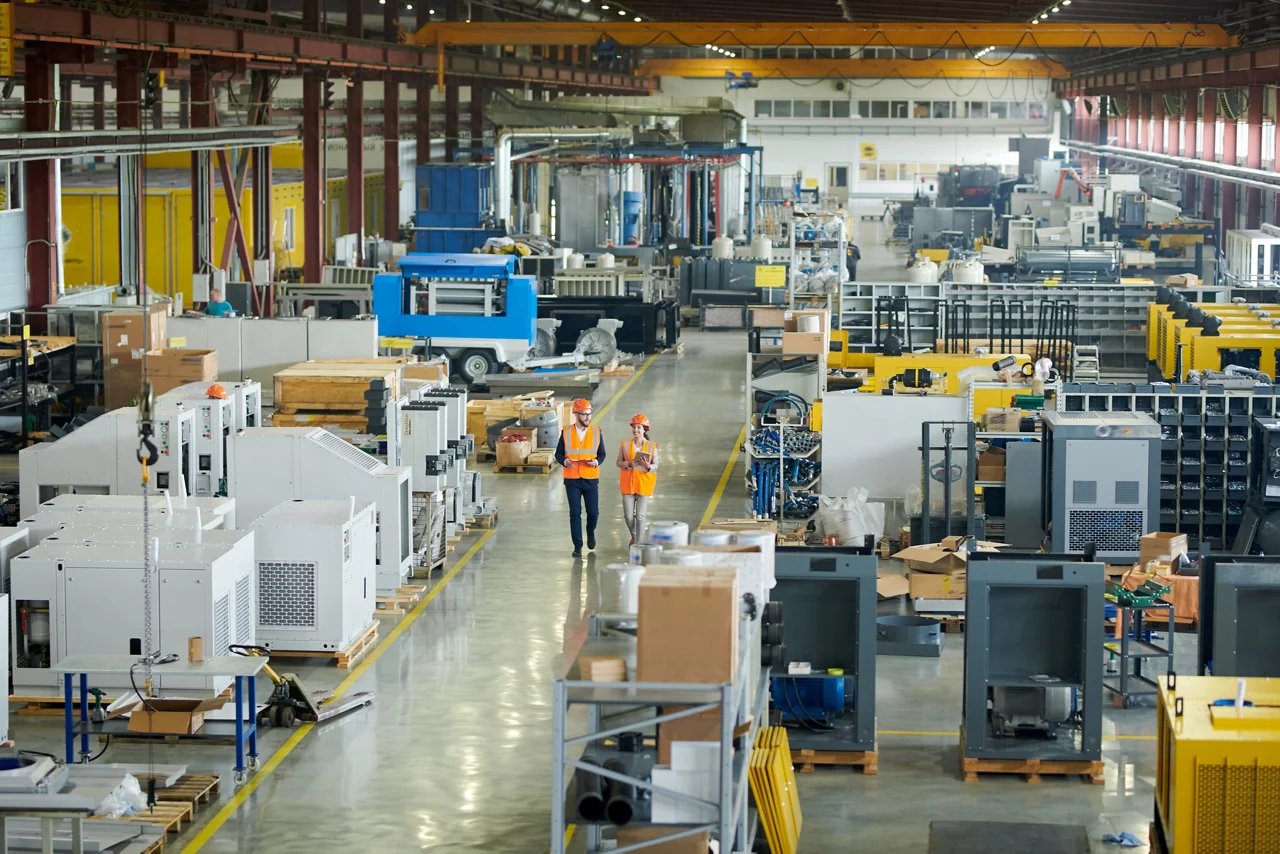
A manufacturing plant asks more of a contractor than almost any other building. The floor must carry process equipment that was often designed before the building, power and compressed air arrive at loads no office ever sees, and the owner expects to keep the line running through every expansion. We build with that sequence in mind, starting from the process and working outward to the shell, rather than the other way around.
This page walks through how a plant gets built in the Oklahoma City metro, including the industrial parks owners ask about, the permitting steps that decide the schedule and the cost drivers that surprise first-time plant owners. If your project is lighter assembly or a mix of office and production, our flex and light industrial page is the closer fit.
Permits and code editions on a plant
Plants draw the widest set of reviewers of any building we build: building, fire, environmental, utility and sometimes the state. In Edmond the local ordinances are organized in Title 16 for building codes, Title 17 for fire codes and Title 22 for power generation and storm shelters, and the city's page describes its 2018 adoption as consistent with the state's minimum codes. Oklahoma City lists the 2018 International Building Code with the 2017 National Electrical Code on its own page, and the state commission has since adopted the 2024 editions effective September 14, 2026. We therefore ask the jurisdiction which edition governs before any drawing is stamped.
Process work adds layers the code books do not cover: hazardous material classifications, hot work, exhaust and emissions, wastewater pretreatment and equipment foundations tied to the manufacturer's specifications. We assemble the owner's process engineer, the architect and the fire marshal early so these are settled in one conversation.
Shell, floor and utilities
Most plants we price are steel frame or tilt-up with a clear span wide enough to leave production lines open, and many include an overhead crane. A building with bridge cranes needs crane-rated columns and runway beams, which is a different structural conversation than a warehouse; see our structural steel erection work for the sequence. The slab is thicker and more heavily reinforced than a warehouse slab, with isolated pads for presses, molding equipment or test stands.
Utilities are often the longest lead item. Electrical service upgrades, gas capacity, process water and sanitary discharge each need coordination with the provider, and a transformer can take many months to arrive. The trade partners for site development and utilities run the underground work early so equipment can be set the day the shell closes.
Building around live operations
Expansion of an operating plant is the common case. An owner who has outgrown a building next door wants new capacity without a single lost shift, which means separating construction traffic from forklift lanes, controlling dust and noise and scheduling tie-ins on the weekends the plant is idle. We write a site-specific safety plan for each plant, walk it with the owner's safety lead and respect lockout, confined space and hot work rules of the operator.
Safety on a plant site also includes severe weather. Employees at a manufacturing plant may be on the floor when a tornado warning is issued, so owners often ask us to price an interior safe room or a hardened corridor. Edmond's Title 22 deals with storm shelters, and Oklahoma City requires a permit and post-inspection registration for a shelter, so those approvals must be built into the schedule.
Industrial parks and employer clusters
The metro's plant sites are concentrated. Soldier Creek Industrial Park in Midwest City, a 40-acre park off NE 23rd Street, had only 6 acres uncommitted as of its 2022 report, and a jet engine remanufacturer committed that spring to 24 acres with an expected investment of up to $50 million. A $255 million, 845,000-square-foot military engines facility opened in Oklahoma City alongside Tinker Air Force Base in October 2024, and an HVAC rooftop-unit maker in Norman opened a 900,000-square-foot center of excellence in 2019 with nearly 400,000 square feet of added lab and production space.
Further out, El Reno added a manufacturing plant for oil and gas components in 2022 that was expected to create about 150 jobs, and the Shawnee area advertises a 15-acre site three miles north of I-40 with a rail spur. See our Midwest City and Norman pages for more on those submarkets.
Cost drivers owners should expect
Plant budgets turn on process equipment foundations, electrical gear, the structural frame (crane or no crane), and the fire protection system. Land cost is a smaller line than owners expect once utilities and detention are added. A phased plan often keeps the first-phase budget manageable, with columns and utilities sized for growth.
We also advise owners to carry a procurement allowance. Electrical switchgear, roof-top equipment and process piping are subject to long lead times, and early orders protect the schedule. Our manufacturing facility construction practice builds that procurement list with the owner during preconstruction.
Who we build plants for
Our manufacturing clients range from aerospace suppliers near the base to oil field equipment makers and food and consumer goods producers. Each has a different priority: an aerospace tenant wants cleanliness and controlled temperature, a heavy fabricator wants crane capacity, and a food producer wants washdown surfaces. The manufacturing industry page goes further, and our food and beverage processing page covers the sanitary side.
If your plant supports the base, you may also want to read about aircraft hangars, since many aerospace suppliers need both production and test space.
Start a plant project with us
Tell us the process, the power demand and the site. We will respond with a preliminary plan and the approvals to expect.
Common Questions
Where should a new plant in the Oklahoma City metro go?
It depends on workforce, rail and the size of the parcel. Industrial parks in Midwest City, Norman and El Reno each offer improved sites, and some advertise utilities already stubbed in. We compare utility readiness and permit paths for two or three candidates.
How long do electrical and utility upgrades take?
Longer than the building in many cases. Transformers and switchgear can have long delivery times, so we place orders in preconstruction and schedule the utility provider early. The shell can usually be finished before power is energized.
Can you expand a plant while it runs?
Yes. We separate construction traffic from plant traffic, protect operating lines from dust and vibration, and schedule tie-ins during planned shutdowns. The plan is written with the plant manager.
Do we need a storm shelter at the plant?
Not necessarily by code, but many owners choose one for employee safety. Edmond has a local ordinance title that covers shelters, and Oklahoma City requires a permit and registration. We price an interior safe room or hardened area as an option.
Which building code edition applies to my plant?
Edmond currently lists the 2018 ICC family while the state adopted 2024 editions effective September 14, 2026. The building department confirms which governs a given permit, and we design to that answer.
Related
Related Services
Related Building Types
Related Service Areas
Ready to talk about your project?
More Building Types
Warehouse Construction
Warehouse construction in Edmond and the Oklahoma City metro: South Kelly.
Distribution Center Construction
Distribution center construction for the Edmond and Oklahoma City metro: dock.
Manufacturing Plant Construction
Manufacturing plant construction in the Edmond and Oklahoma City metro.