Overview
Commercial construction on the Broadway Extension freeway corridor between Oklahoma City and Edmond: access approvals, site work, retail and offices.
Project Details
Category
Area
- Edmond and the Oklahoma City metro
Next step
Service Areas
General Contractor on the Broadway Extension Corridor
Freeway frontage sells on access, and access is decided by agencies, not by the builder. For owners looking at parcels along the Broadway Extension, the freeway that links downtown Oklahoma City with Edmond, we spend the first weeks of any project on curb cuts, turn lanes, drainage and the state's right-of-way before we talk about finishes. A dealership, a medical office, a convenience and fuel site or a small office building can look simple on paper and still stall for months if an access permit comes back with conditions.
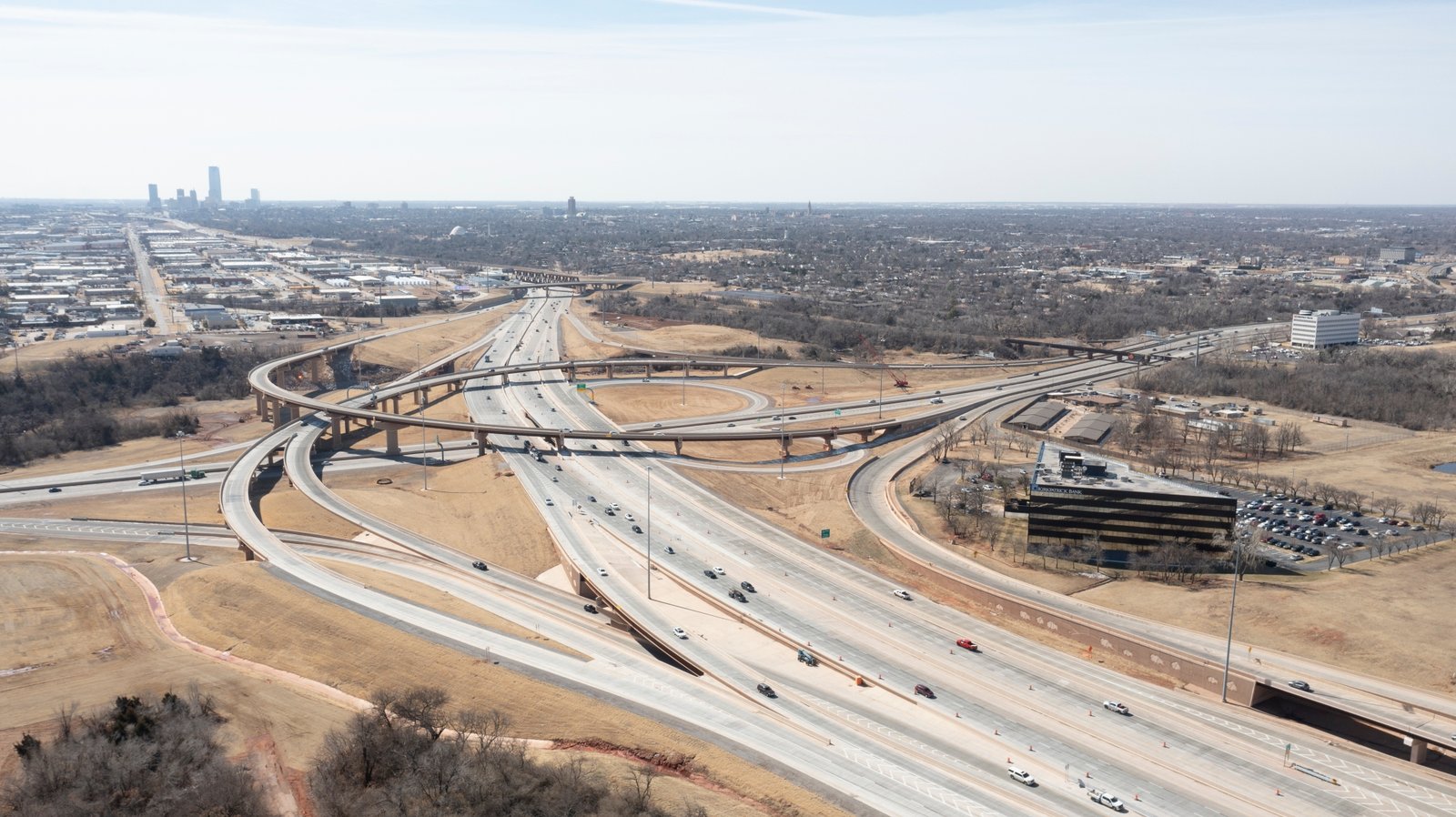
Public sources describe the corridor as US 77, a freeway whose northern end sits at the Memorial Road and Kelly Avenue junction in Edmond, and which meets I-35 and the SH-66 junction at roughly mile 152.0 heading north. Those details come from a general reference, so we treat them as orientation and confirm exact alignments with survey and state records on every parcel. What matters for a builder is simple: the road is a state facility, and nearly everything touching its edge involves coordination beyond the city.
Access, right-of-way and the state highway agency
Work near a state highway usually requires the Oklahoma Department of Transportation to approve driveways, utility crossings and any change to drainage. We prepare those submittals alongside the city's site plan so neither review waits on the other, and we leave time for the state's comments to come back. Typical conditions include deceleration lanes, restricted turning movements, specific pipe materials under the right-of-way and limits on temporary construction entrances.
For that reason we build the site-work estimate with an access allowance rather than a single line. Owners get a realistic picture of the base case and of what the cost looks like if the agency requires a full turn lane. The trade partner team for site development and utilities handles the grading, storm detention and utility extensions that follow.
A corridor with a long construction history
Roadwork here is not new. A widening and reconstruction program on US 77 began in the mid-1990s between Edmond and the North 36th Street exit on I-235. A $30 million contract with two contractors, started at the end of July 2008 and targeted for late 2009, widened the Broadway Extension and realigned the Memorial Road and Kelly Avenue interchange near Edmond. These are older facts, and they do not predict future work, but they show the corridor has been rebuilt repeatedly and that the state treats it as a priority route.
The Edmond Economic Development Authority also lists Broadway among its key investment corridors. That is an official signal that the city wants commercial investment here, which usually translates into a cooperative review for projects that meet the design and access standards. We keep notes on what reviewers have asked for at nearby sites and pass them to owners before design is final. Related patterns appear on our pages for the Kelly Avenue corridor and Downtown Edmond.
What gets built on the frontage
Freeway-oriented sites favor uses that depend on visibility and drive-up access. We build commercial construction projects such as showrooms, service buildings, small retail centers and professional offices, and we handle restaurant and quick-service prototypes that come with a national brand's drawings and a tight turnover date. Medical offices also like this stretch for patient access, and for those we coordinate parking counts and accessible routes with the city's review.
Because the corridor leads toward the metro's core, some owners use sites here for contractor yards, storage and light flex buildings. These uses can fit, but zoning and screening rules vary, so we confirm the permitted use before an owner commits to a parcel.
Sequencing around traffic and weather
Moving heavy equipment and materials along a freeway frontage takes planning. We schedule deliveries outside peak commute periods, set up temporary entrances that meet state requirements and keep mud and debris off the roadway, because tracked dirt on a state route draws complaints quickly. Concrete pours near the shoulder require traffic control plans, and we sequence them for days when forecast winds and storm cells are low.
Oklahoma spring weather affects the schedule as much as agencies do. We build float into the earthwork phase, protect open excavations from storm runoff and keep erosion controls maintained, because inspectors check them after rain events. Detention and outfall design deserve early attention on highway sites, since runoff leaves toward a state ditch or storm system that someone else maintains. Our stormwater and drainage scope covers the pond, the outlet structure and the calculations reviewers ask for, and we confirm downstream conditions on site before the design is final. If a neighbor's flow crosses your parcel, we document it before grading so the record is clear.
Codes, storm design and signage
Edmond lists the 2018 ICC family of codes as its adopted set, and the state adopted newer International Code editions effective September 14, 2026. We confirm the applicable edition with the building department for each permit. Signage is another approval that corridor owners underestimate: pylon signs, monument signs and wall signs have size and setback rules that affect where the building sits on the lot, so we ask for them during site planning.
Storm design is part of the same conversation. Roof edges, canopies and rooftop equipment on exposed freeway sites take wind and hail loads, so we recommend systems with a track record in this region and attachments tested for uplift. Owners with retail chains usually have their own prototype requirements, and we coordinate those with local conditions early.
Talk to us about your Broadway Extension parcel
Send the address and intended use, and we will review access, utilities and approvals before you commit. Request a quote and we will respond with a plan.
Common Questions
Do I need state approval to build along the Broadway Extension?
Most likely, if your driveway, utility crossing or drainage touches the state right-of-way. The Oklahoma Department of Transportation reviews access to its facilities, in addition to the city's site plan review. We submit both packages together and plan for comments, which is the best way to avoid a stalled permit.
How do you price a site where access is uncertain?
We carry a base case and an alternate in the estimate, such as a standard driveway versus one with a deceleration lane. That shows you what the project costs in each outcome before the agency has answered. We update the number as soon as the review is complete.
What uses make sense on freeway frontage?
Uses that depend on visibility and quick access do well: showrooms, service buildings, restaurants, medical offices and small retail. Industrial storage can work where zoning allows. We recommend confirming the permitted use and screening requirements with the city before you buy or lease the parcel.
Is the corridor still being rebuilt?
The public sources we use describe past widening and interchange projects, including a $30 million contract that started in 2008, but we do not rely on them to predict future work. We check current state and city plans for each parcel and tell owners what we find.
What code edition applies to a building here?
Edmond lists the 2018 ICC family of codes, and the state adopted newer editions effective September 14, 2026. Because the two timelines differ, we confirm the edition with the building department and record the answer in the project file.