
Overview
Stormwater and drainage construction in Edmond and Oklahoma City: storm sewer, detention basins, culverts, erosion control and the review process.
Project Details
Category
Area
- Edmond and the Oklahoma City metro
Next step
General Contracting Services
Stormwater and Drainage Construction in Edmond and the OKC Metro
Rain does not care where a property line runs, and neither does the drainage ordinance written to deal with it. Every roof, parking field and truck court we build turns a patch of absorbent ground into a surface that sheds water, and that water has to go somewhere the city, the neighbor and the downstream creek can accept. Stormwater work is where site design, civil engineering and plain field craftsmanship meet, and it is rarely the place to save money.
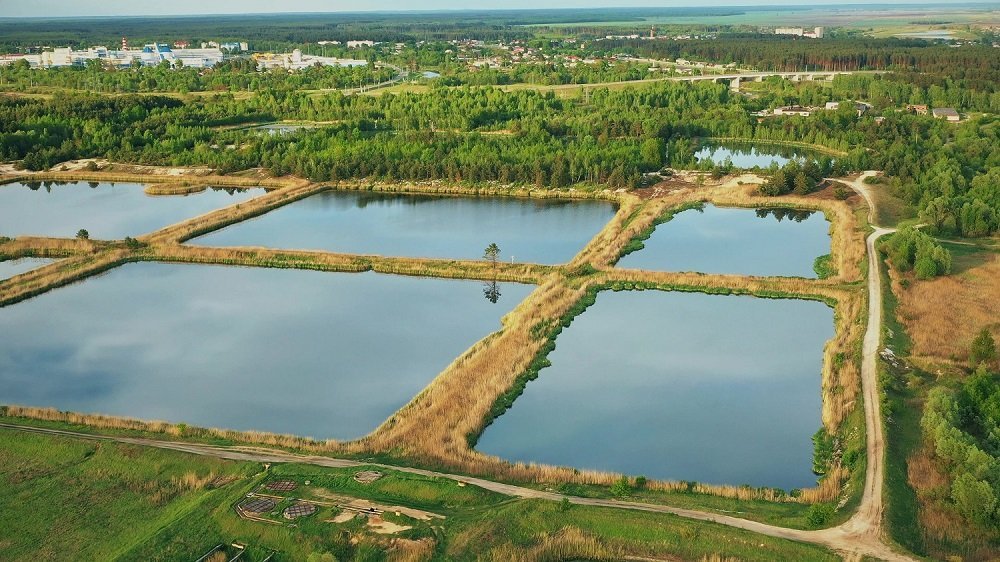
General Contractors of Edmond builds the drainage systems that civil engineers design: storm sewer, inlets, culverts, headwalls, detention and retention basins, outlet structures, swales and the erosion controls that protect all of it during construction. We install them in the order the grades allow, usually first among the underground trades, because everything else on the site has to clear them.
We tell owners early what the city will ask. On a stormwater package that means a drainage report, a pollution prevention plan and sometimes a downstream analysis, and the review comments on those documents set the pace of the whole site more often than weather does.
A Metro Built Around Rivers and Reservoirs
Water shapes how this region builds. Arcadia Lake in eastern Edmond, just east of Interstate 35, covers 1,820 acres with about 26 miles of shoreline; an earthen dam on the Deep Fork River created it in 1984, and its purpose was to control floods in the Deep Fork River Basin. A project near that basin plans for runoff differently from one on a ridge in northwest Oklahoma City.
Farther south, Wikipedia describes Tuttle as sitting in a low-lying river basin along the South Canadian River, and the Oklahoma Historical Society says Harrah sits at a natural ford of the North Canadian River in the far southeast corner of Oklahoma County. Those are reminders that low ground, high groundwater and floodplain boundaries show up on parcels that look dry on a clear day. We ask for the floodplain map and the geotechnical borings before we price any site where a creek or river is nearby.
The Paper Behind the Pipe
A drainage plan has to be approved before pipe goes in the ground. In practice the owner's engineer files the drainage report with the city, the city comments, the engineer revises and the cycle repeats until the reviewer is satisfied. We join that process when owners want us at the table, because we can say what a proposed outlet or basin will cost to build and what a small change would do to the earthwork.
Construction-phase stormwater is a separate obligation. State and local rules require erosion and sediment controls on active sites, and the person holding the permit is responsible for inspections and corrections. We install the controls, keep the logs and repair damage after storms, which are the three things inspectors check first. Edmond's building department lists the 2018 codes it follows and states that permits are required for detached structures over 200 square feet, which includes many of the small utility and pump structures that accompany a basin.
Pipe, Structures and Basins
Storm sewer follows the engineer's profile, which means grade is everything. We set pipe by laser, check inverts at every structure, bed and backfill in lifts and keep the trench box on site where the depth demands it. Reinforced concrete pipe, corrugated metal and plastic each have a place, and the specification tells us which is allowed for the loads above them.
Inlets, manholes, junction boxes and headwalls are the places where drainage meets the paving and the building. We pour or set them to the finish grade the paving crew needs, because an inlet that sits a half inch proud of the pavement creates a ponding spot the owner will see on the first rainy day. Detention basins get their outlet structures built first so that, if rain arrives before the basin is finished, it can discharge in the way the plan intended.
What We Manage Closely
On most commercial sites we schedule and supervise excavation, pipe laying, structure installation and the concrete work around inlets and flumes. Doing so keeps one foreman accountable for the grade of the whole system, and it removes the gap that opens between an excavator, a pipe installer and a concrete sub who each blame the other when something does not line up.
We also schedule the stabilization that keeps a new basin from eroding before grass grows: sod or seed with erosion blankets, riprap at outlets and check dams in swales. When the weather is dry we schedule that work promptly, because a fresh slope that gets hit by a heavy storm can lose weeks of progress in an afternoon. The earthwork is handled in coordination with our mass grading work so that basin excavation also supplies fill for pads.
Where Drainage Meets the Rest of the Job
Drainage decisions reach into almost every other part of a project. A retail center needs inlets that do not collect shopping carts and sheet flow that does not cross a sidewalk. An industrial site needs truck courts pitched to inlets without ponding at the dock doors, and our work on dock aprons and truck courts starts from that requirement. Owners who plan a complete site package can read how drainage fits with grading and utilities on our site development and utilities page.
The buildings that most often drive a drainage design are the large-roof types. Large roofs such as those on retail shopping centers shed the most water, and places like Arcadia and Tuttle show how differently the same rainfall behaves depending on the ground. Public owners such as school districts and cities hold many of the basins we build, and the buyers described on our page for government and public sector owners usually require a maintenance plan at closeout.
Start With the Drainage Report
If you have a drainage report or a floodplain question on a parcel, send it over. We will tell you what the basin and pipe system are likely to cost and which parts of the schedule depend on review.
Common Questions
Does a detention basin have to be built before the building?
Usually it should be, or at least rough-graded and equipped with its outlet. Many cities expect the basin to function as a sediment trap during construction, and building it early gives the site somewhere to send runoff before the pavement exists. We often build it first and use its spoil on the pads.
Who maintains the basin after we finish?
The owner, unless the plan dedicates it to the city or an association. We provide the as-built survey, the outlet structure details and a written list of what to inspect, such as clogged trash racks, erosion at the outfall and sediment depth. Owners who skip that maintenance can face enforcement later, so we ask for it in the closeout binder.
What causes ponding at a new parking lot?
Most ponding comes from small grade errors, a settled trench or an inlet set too high. Pavement tolerances are measured in fractions of an inch, and an error in the base course shows up as a bird bath. We check grades with a laser before paving and test with water on large areas if the owner wants proof.
Can we reduce detention requirements by using on-site infiltration?
Sometimes. It depends on the soil, the groundwater and what the city's criteria allow, and the geotechnical report decides whether infiltration is workable. Where it is, the engineer can reduce the basin size. Where it is not, forcing infiltration into clay or a high water table creates a maintenance problem.
How do you handle storms during construction?
We pay attention to forecasts and secure the site before heavy rain: close open trenches, protect stockpiles and inspect inlet protection. After a storm we walk the site, clear what has clogged and document repairs. Those records matter to the permit holder if an inspector arrives.
Related
Related Services
Related Building Types
Related Service Areas
Ready to talk about your project?
More General Contracting Services
Commercial Construction
Commercial construction in Edmond and the Oklahoma City metro, with permit.
Office Building Construction
Office building construction in Edmond and Oklahoma City: hail-ready envelopes.
Retail and Shopping Center Construction
Retail shopping center construction across Edmond and the Oklahoma City metro.