Overview
Truck courts and dock aprons in Edmond and Oklahoma City: reinforced concrete aprons, dolly pads, drainage, trailer parking and turning geometry.
Project Details
Category
Area
- Edmond and the Oklahoma City metro
Next step
General Contracting Services
Truck Courts and Dock Aprons in Edmond and the OKC Metro
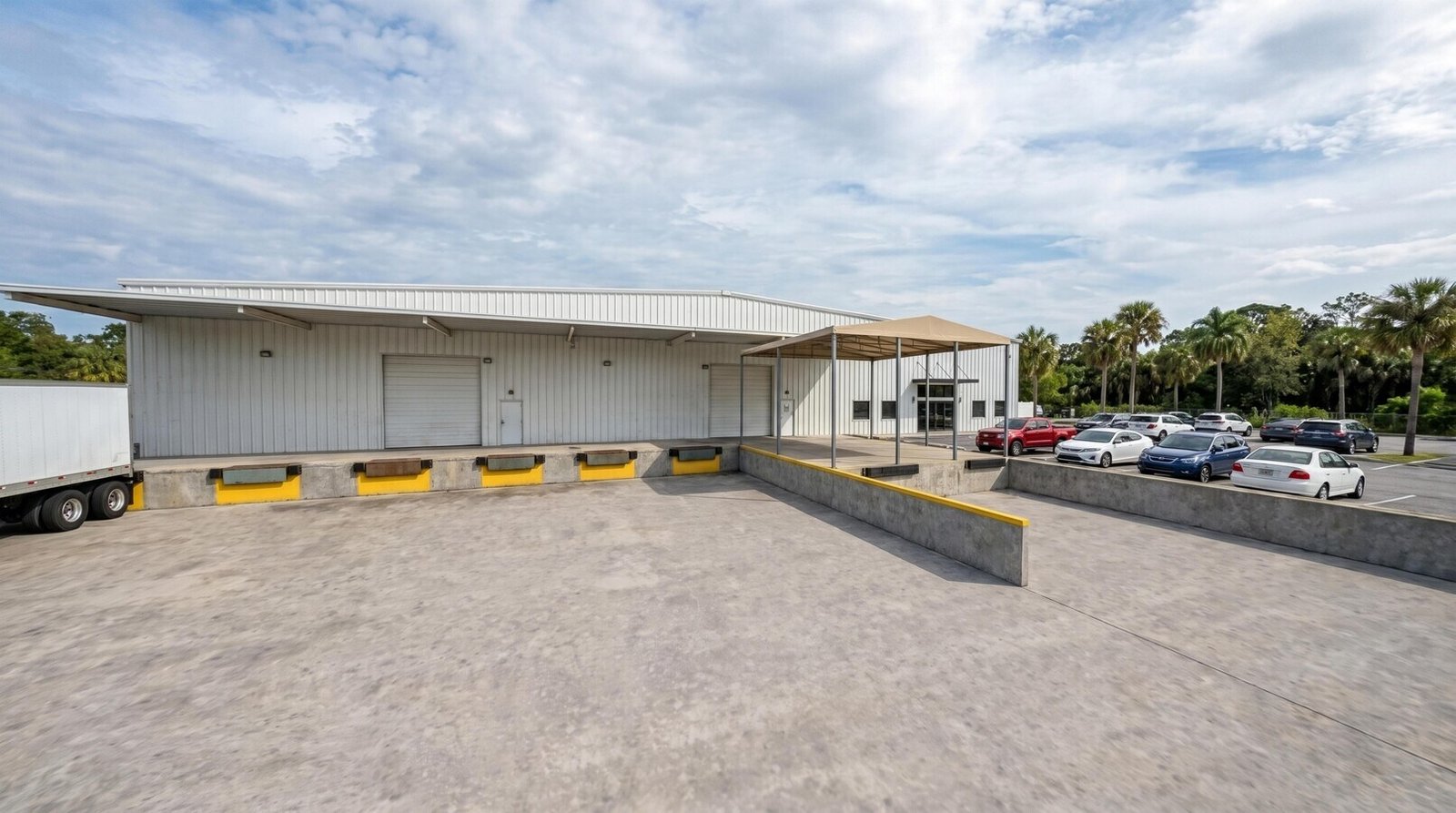
Trailers turn harder than anyone drawing a site plan expects. A 53-foot trailer backing into a dock swings its rear end through an arc, drops its landing gear onto pavement that may not have been designed for a concentrated load, and parks over a surface that must stay level enough for a forklift to ride into the box. The truck court is where a distribution building makes or loses time, and it is the first thing to fail if it was built as ordinary parking.
General Contractors of Edmond builds truck courts, dock aprons, dolly pads, trailer parking and the drive lanes that connect them for warehouses, distribution centers, cross-docks, food processors and manufacturing plants in the Oklahoma City and Edmond metro. We pour reinforced concrete where the loads demand it, place asphalt where the engineer allows it and detail the transition between the two so one does not tear apart the other.
The work depends on the geometry, so we review the truck turning templates, door counts and trailer sizes with the owner before the first form is set. We tell owners early what the city will ask, which for large truck sites is often a traffic study and a fire lane layout that governs the court as much as the tenant does.
Buildings That Live and Die by the Court
Truck courts show up wherever freight moves. Crest Foods, an Oklahoma grocery company with its corporate office in Edmond, bought a 220,000-square-foot distribution center in August 2014, and a grocery warehouse like that runs trailers all day. Its pavement sees refrigerated trailers that idle on the apron, so the surface has to resist fuel drips and the thermal movement that comes with heavy diesel units.
Our distribution center and cross-dock terminal clients usually want two-sided docks with deep aprons, while manufacturing plants need fewer doors but heavier loads. Tenants of a flex or light industrial building often share a smaller court with mixed vehicles, and the design of the apron must work for box trucks, vans and the occasional tractor-trailer.
Access, Corridors and Neighbors
A court is only as useful as the route that reaches it. Lariat Landing, directly east of Will Rogers World Airport along I-44, covers more than 400 acres including about 88 acres of industrial and commercial land that is shovel ready for long-term ground lease along New South Portland Avenue, and it lists Amazon, FedEx, SkyWest Airlines and Field Aerospace among its tenants. A user considering a site like that thinks about the trip from the highway to the dock as much as the building itself.
The John Kilpatrick Turnpike, which is 31 miles long with its entire route inside Oklahoma City limits, had its southern extension to SH-152 open in early 2020, and the extension gives southwest and west-side industrial sites another way to the interstates. We ask owners where trucks will enter, queue and leave, since a dock that works perfectly on paper still fails if trucks back up onto a public street while waiting for an open door.
Concrete, Dowels and Drainage
Dock aprons are usually reinforced concrete, thicker than interior floors, with dowelled joints that transfer load from one panel to the next so the edges do not fault. The subgrade under the apron is prepared more carefully than the rest of the court, and we test it before placing base. Dolly pads at trailer parking positions are thicker still because landing gear concentrates the trailer's weight onto a small area.
Drainage is built into the geometry. The apron is pitched away from the building so water does not run toward dock doors, and the court is shaped so inlets are fed by sheet flow and do not sit in the wheel paths. The trade team for stormwater and drainage places the inlets and pipe before paving, and the interior slab is poured to a matching elevation so a loaded forklift does not hit a lip at the door.
Concrete or Asphalt, and Why It Matters
Concrete costs more than asphalt to install and less to maintain under heavy, slow, turning loads. Asphalt is flexible and quick, but it ruts under standing trailers, and spilled diesel can soften it. Many owners use concrete at the docks and the trailer storage positions and asphalt for the lighter drive lanes, which gives them the durability where it counts and a lower first cost elsewhere.
The other cost drivers are the quantity of reinforcing steel, the base thickness, the number and size of joints and the area that has to be poured. A large court can use more concrete than the building slab, so we price the court and the building floor together when the owner asks for a total. Our estimating team can compare alternatives and give the owner a life-cycle number rather than only a first-cost one.
Courts Across the Metro and Beyond
We build courts for sites near the major interchanges around Oklahoma City, in industrial parks in Edmond and in smaller cities where rail or highway access draws freight. A 15-acre industrial site near Shawnee, described in the Oklahoma Department of Commerce prospectus, is three miles north of I-40, bordered on its east by a BNSF rail spur and zoned for medium industrial use. A site with rail adjacency adds track crossings, spur geometry and sometimes additional approvals to the court design.
Owners can find more about how we think about these locations on our pages for Oklahoma City and Shawnee, and about the tenants who use them on our logistics and distribution page.
Send Us the Truck Template
Share the site plan, the door count and the expected trailer mix and we will recommend a pavement section, a joint layout and a construction schedule for your court.
Common Questions
How thick should a dock apron be?
The engineer determines thickness from the loads, the subgrade and the expected truck count. Aprons are generally thicker than ordinary parking, and the area under landing gear is thicker again. We build to the specification and flag a concern early if the proposed section looks light for the trailer traffic.
Can we build the court after the building is finished?
Yes, but it is usually better to build the dock apron with the building so the elevations match and the doors are protected from trucks. Heavy trucks used by the erection crews can damage the finished pavement, so we sometimes pour the court first and protect it, or delay the final lift.
What causes dock aprons to fail early?
Weak subgrade, thin sections, missing dowels and poor drainage are the usual causes. Water that gets under a slab softens the base and pumps fines out through the joints. We prepare the subgrade carefully and seal joints to keep water out.
Do we need a traffic study for a truck court?
Often the city requires one for a large facility, since it can affect adjacent streets and intersections. The owner's engineer prepares it, and we can supply haul and delivery counts to help. The study may require turn lanes or driveway changes that we build as part of the site work.
How long does a large court take to build?
It depends on the size and the weather, but the main steps are subgrade prep, base, forms, steel, pour, cure and joint sawing. A big court is built in sections so the owner can take partial possession. We lay out the section sequence at the start so the pours follow one another smoothly.
Related
Related Services
Related Building Types
Related Service Areas
Ready to talk about your project?
More General Contracting Services
Commercial Construction
Commercial construction in Edmond and the Oklahoma City metro, with permit.
Office Building Construction
Office building construction in Edmond and Oklahoma City: hail-ready envelopes.
Retail and Shopping Center Construction
Retail shopping center construction across Edmond and the Oklahoma City metro.