
Overview
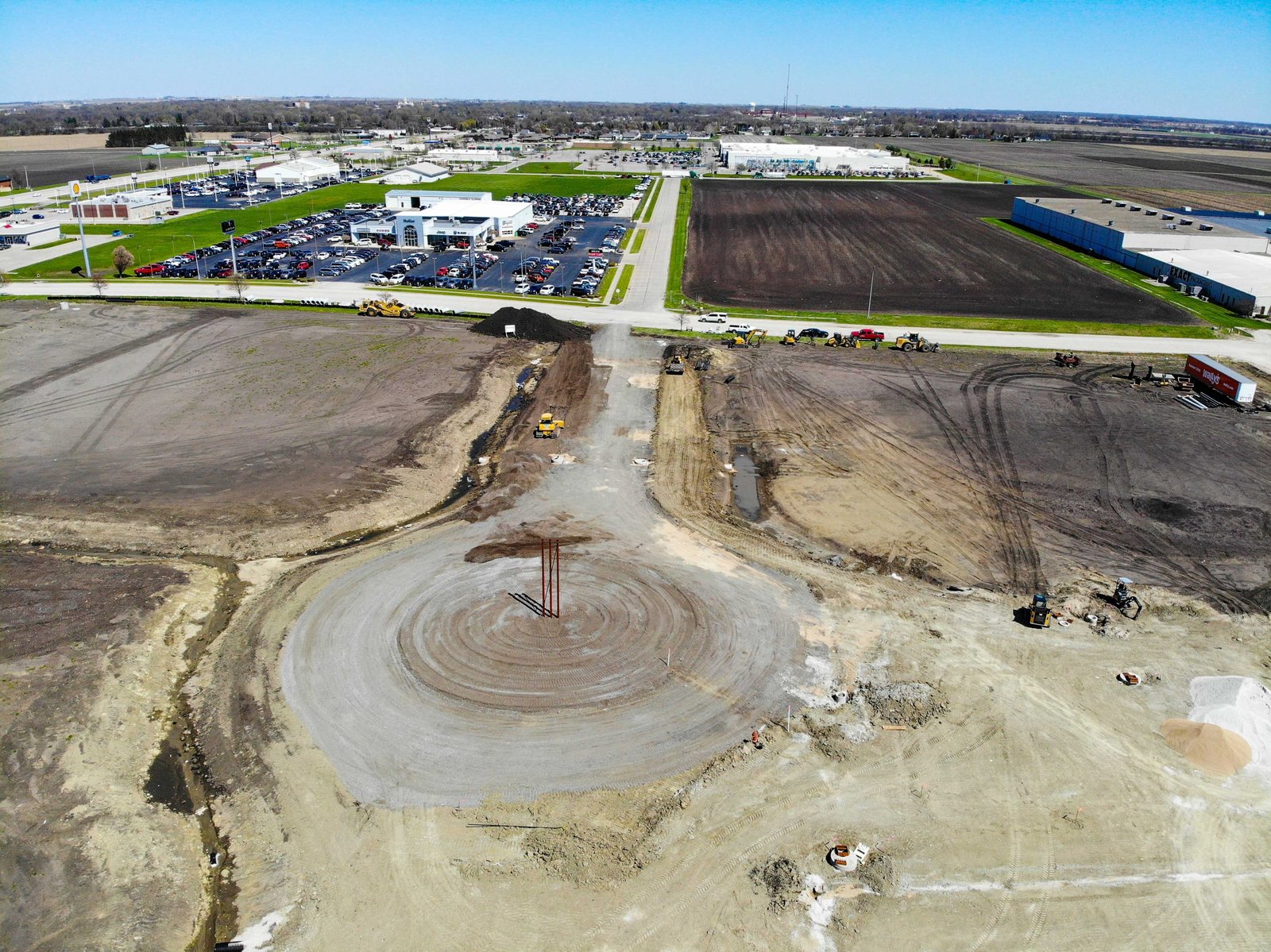
Mass grading and earthwork in Edmond and Oklahoma City: pad preparation, cut and fill balance, compaction testing, haul routes and weather scheduling.
Project Details
Category
Area
- Edmond and the Oklahoma City metro
Next step
General Contracting Services
Mass Grading for Pads and Sites in Edmond and the OKC Metro
Dirt is the first line item on a budget and the one that moves the most after the contract is signed. A pad that looks level on a survey can hide a few feet of fill at one corner and a few feet of cut at the other, and the haul-off or import that results can swing a bid by more than any finish selection will. We treat mass grading as a planning job before it is an equipment job, because the cheapest yard of dirt is the one that never leaves the site.
General Contractors of Edmond clears, strips, cuts, fills, compacts and fine-grades building pads, parking fields and truck courts across the Oklahoma City and Edmond metro. We read the geotechnical report before the grading plan, and we lay out the earthwork around the approvals the owner still needs, so that the first machine on site is working inside a permit rather than ahead of one.
Owners usually call us when a parcel has just closed or is about to. They want to know how much of the site is buildable as drawn, what the stormwater plan forces them to dig, and how many weeks of dry weather the schedule quietly assumes. Those are fair questions, and we answer them with numbers before we mobilize.
What the Earthwork Package Includes
A grading package starts with erosion control, because the city will not let us strip a site until silt fence, inlet protection and a stabilized construction entrance are in place. After that comes clearing and topsoil stripping, with the topsoil stockpiled for landscape areas or hauled away if the site cannot hold it. Cut and fill follow the engineer's grading plan in lifts, each compacted and tested before the next goes down.
Building pads get the most attention because a slab or footing will sit on them for the life of the building. We bring pads to subgrade within the tolerance the structural engineer specifies, then hand the surface to the foundation crew or the paving crew in a condition they can accept without rework. Detention basins, swales and pond embankments are cut early so their spoil can be used where fill is needed, which keeps trucks off the public street.
Reading the Site Before the Bid
The metro offers several different kinds of ground to build on. Norman's University North Park, just off I-35, is a 30-acre site with lots of four to 15 acres and all utilities available, and in July 2020 it became the first Norman site to earn Site Ready certification under the state's updated program. A certified, utility-ready lot is the easy end of the spectrum, where grading is mostly about shaping pads and drainage rather than correcting the land.
The harder end is a creek-side or infill parcel where utilities are not stubbed and the grades were set by someone else's drainage a generation ago. Mustang's Town Center sits inside the 160-acre Wild Horse Park, and the Greater Oklahoma City Chamber says the city has shovel-ready pad sites near its busiest intersections. Pad sites like those still need a grading plan that ties into existing curbs and storm inlets. We walk the boundaries, compare the survey to what we see, and flag the differences before they become change orders.
Weather, Haul Routes and Sequence
Earthwork is the trade most exposed to weather, and Oklahoma gives it plenty. A wet week in spring stops compaction work entirely, while a hot dry stretch can leave fill too dry to bond until it is conditioned with water. We carry weather days in the earthwork duration, schedule the cut-and-fill balance for the drier months where the project allows, and keep a stabilized surface ready so that a storm does not undo the previous week.
Haul routes deserve the same planning. When the Oklahoma City logistics buildings go up, such as the 300,000-square-foot Sam's Club distribution center at the OKC Logistics Park at SW 29th and Council, the earthwork has to move with the loading yard and truck court in mind. We pick haul routes that avoid school zones and arterials at peak hours, sweep the street daily, and talk with the city's inspectors before a change in route rather than after a complaint.
Where Grading Costs Come From
Three things drive earthwork cost: the balance between cut and fill, the quality of the on-site soil, and the distance to wherever surplus or borrow material is going. A site that balances needs only machine time. A site that is short on fill needs imported material, which means trucks, a tested source and a haul cost for every yard. A site that is long on soil needs a place to put it, and a legal one.
Soft or wet subgrade is the item most likely to surprise an owner. Undercutting and replacing a weak zone, adding lime or cement treatment, or placing geotextile and stone can each add days and dollars, and the geotechnical report tells us which is likely. We price the base case and the contingency separately so an owner can see what is a known quantity and what is a risk. If the owner is still choosing between parcels, our preconstruction estimating work can compare earthwork exposure on each before the closing date.
Grading Across the Metro
We grade along the corridors where Edmond's development agency says it wants investment, which it names as 2nd Street, Broadway, Downtown Edmond, and I-35 at Covell. We also grade in Oklahoma City, Norman and the suburbs that ring them, and the earthwork looks different in each. Infill pads next to existing neighbors require tight erosion control and quiet hours; greenfield industrial lots need long, efficient haul runs and room for stockpiles.
If a site is bound for a warehouse, truck court or retail center, we coordinate the pad with the dock aprons and paving that follow. If it is part of a larger development, grading usually leads into site development and utilities. Developers who build for lease will find more on how we see their projects at our page for commercial real estate developers.
Bring Us the Survey and the Soils Report
Send the survey, the geotechnical report and the draft grading plan, and we will tell you what the earthwork is likely to cost, what it depends on and where the site may surprise you.
Common Questions
How soon can grading start after we close on land?
Usually the limit is the permit, not the equipment. A grading or site permit, an erosion control plan and a utility locate all have to be in place first, and the city can ask for stormwater review comments that take weeks to resolve. We start the paperwork during due diligence when we can, so that mobilization follows closing by days rather than months.
Do you test the fill as it goes down?
Yes. An independent testing agency, hired by the owner or by us depending on the contract, takes density tests on every lift and reports them to the engineer. A lift that fails is reworked before the next one goes on. Those test reports become part of the closeout record and are what a lender or building official will ask to see later.
What happens if we hit rock or soft ground?
The geotechnical borings tell us what to expect, but borings are spaced apart and can miss things. Our contract language spells out unit prices for rock removal and for undercut and replacement so the cost of a surprise is known before the surprise. We document the area with photographs and survey shots so the engineer can approve the fix quickly.
Can grading be done in winter?
Often, with care. Frozen ground cannot be compacted to specification, and fill cannot be placed on frozen subgrade, so cold snaps stop certain work. Mild stretches still allow stripping, rough cut and haul-off. Owners with a tight schedule can sometimes pull early earthwork into the cold months and save the final fine grading for spring.
Who is responsible for stormwater permits during grading?
The owner is the permit holder, and we operate under that permit. We install and maintain the erosion controls, keep inspection logs and fix deficiencies the same day. If the plan has to change because of field conditions, the engineer revises it and we resubmit before the work moves.
Related
Related Services
Related Service Areas
Ready to talk about your project?
More General Contracting Services
Commercial Construction
Commercial construction in Edmond and the Oklahoma City metro, with permit.
Office Building Construction
Office building construction in Edmond and Oklahoma City: hail-ready envelopes.
Retail and Shopping Center Construction
Retail shopping center construction across Edmond and the Oklahoma City metro.