Overview
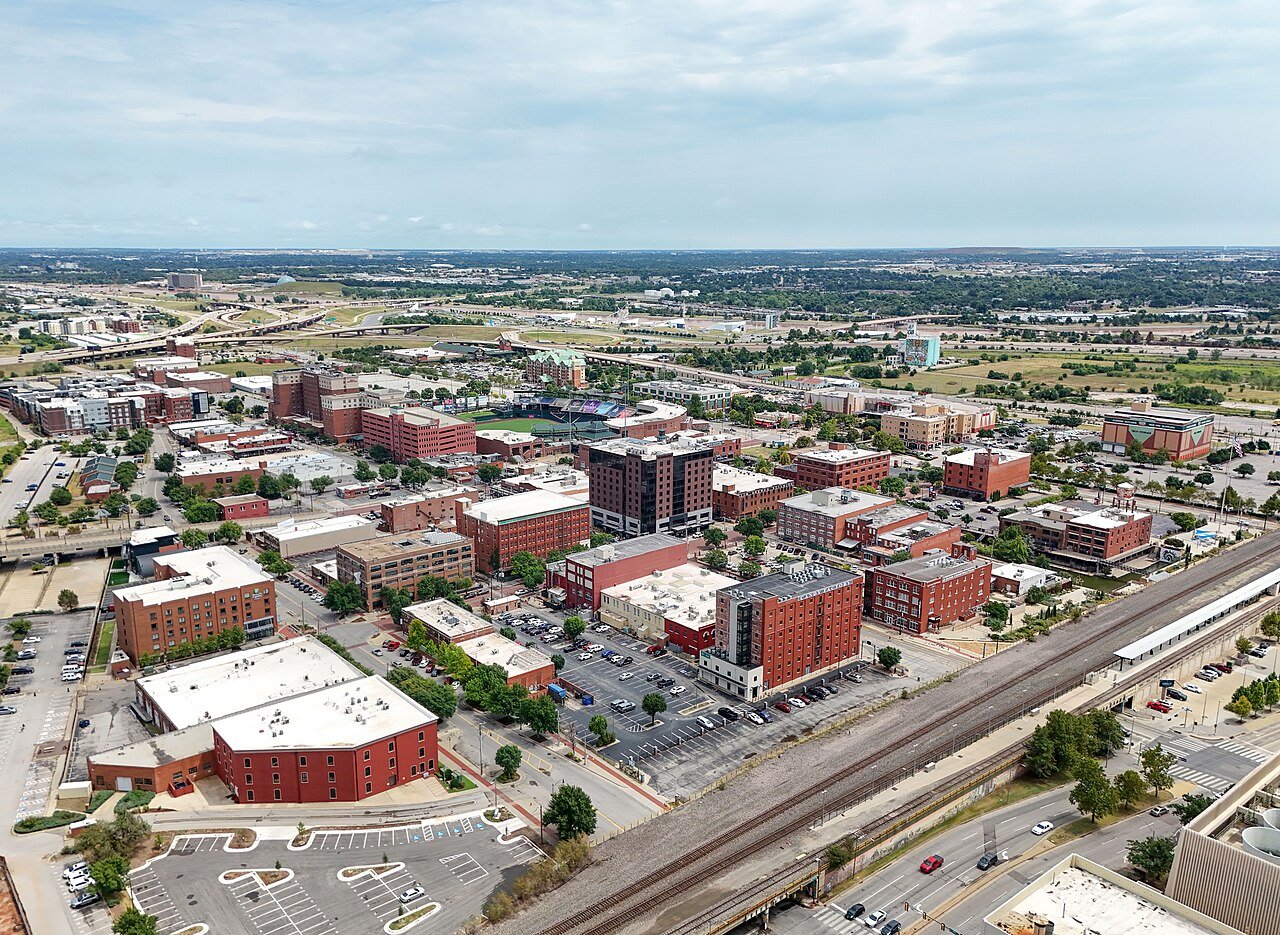
Bricktown adaptive reuse, restaurant, hotel and entertainment construction in historic Oklahoma City warehouses, planned around tight streets and event days.
Project Details
Category
Area
- Edmond and the Oklahoma City metro
Next step
Service Areas
Adaptive Reuse and Hospitality Contractor in Bricktown
Brick warehouses from the turn of the last century make good restaurants, hotels, offices and apartments, but only if the contractor knows what is behind the plaster. We take on adaptive reuse, tenant finish, hospitality and entertainment-district work in Bricktown, a former warehouse district of about 50 city blocks just east of downtown Oklahoma City. The district is bounded by the Oklahoma River to the south, I-235 to the east, Deep Deuce to the north and the central business district to the west, according to Wikipedia, and that compact footprint defines how a job gets staged.
Old masonry buildings reward careful survey work. Bricktown's first brick buildings appeared between 1898 and 1903, and four railroad companies ran freight operations east of the railroad tracks in the district in the late 19th and early 20th centuries. Floors that carried freight are usually strong, but walls, lintels, roof framing and below-grade conditions vary widely, and we assess each building before pricing.
Adaptive reuse of masonry buildings
A typical Bricktown conversion starts with a condition survey: masonry mortar and tuck-pointing needs, lintel and shoring conditions, floor load capacity, roof drainage, and the state of plumbing and electrical risers. We open up representative areas, take cores or probes where warranted and set an allowance for the unknowns. Owners who skip this step often find that the cheap building is expensive.
Structural work in old buildings is usually done in sequence: shore, open, repair, then close. New steel beams may replace failed timber, floors may be topped with lightweight concrete to level them, and exterior walls may need stitching or repointing with mortar matched to the original hardness. Using the wrong mortar can damage historic brick, so we test samples and follow conservation guidance where owners seek tax credits.
Tenant finish in historic shells needs patience. Kitchens need hood routes and grease interceptors, bars need ventilation and noise control, and event spaces need egress that fits the existing stairs. Our renovation and adaptive reuse and restaurant construction teams plan these items together, including the structural reinforcing that makes a new opening or roof deck possible.
A district rebuilt by public projects
Public investment has repeatedly reshaped Bricktown. The Chickasaw Bricktown Ballpark opened in 1998 and the Bricktown Canal in July 1999 under the MAPS plan, and the Oklahoma City Streetcar loop through Bricktown opened in December 2018. Each of those changed how people reach the district and which buildings are worth renovating. For an owner, the lesson is that public infrastructure is the reason private projects pencil out.
The next big public project is an arena. News 9 reported on May 22, 2024 that Oklahoma City Council approved plans for an arena costing nearly $1 billion that could open as early as 2029, with about 60,000 square feet on E.K. Gaylord set aside for a transit hub beside the Santa Fe Depot. We treat that timeline as uncertain, but nearby owners should expect continued construction activity, road closures and demand for hotels, restaurants and event-night services.
Logistics in a tight district
Bricktown streets are narrow, event days bring heavy foot traffic, and the streetcar loop adds a fixed rail route to the street grid. We schedule heavy deliveries away from game and concert times, coordinate lane closures with the city and keep clean routes for emergency vehicles. Cranes and concrete pumps are scheduled for early mornings when the district is quietest.
Working in an occupied district is a neighbor-relations job as much as a construction job. A restaurant next door loses money when a pump truck blocks its entrance at lunch, and a hotel loses guests when jackhammers start at dawn. We meet adjacent owners before mobilization, agree on quiet hours and keep a single phone contact for complaints. Temporary protection for neighboring storefronts, pedestrian covered walkways and street-level cameras are routine parts of our logistics plans here.
The Oklahoma River and Bricktown Canal also matter to drainage and utilities. Low-lying sites may see water in heavy rain, and basements in old buildings sometimes flood. We examine drainage, sump systems and backflow protection during design, and we avoid placing sensitive equipment in vulnerable below-grade spaces.
Hospitality and event space
Hotels, bars and event venues in Bricktown benefit from the Amtrak connection at the Santa Fe Depot, which is the departure point for the Heartland Flyer according to Wikipedia, and from the district's steady visitor traffic. Owners building a hotel or restaurant want a quick opening and a durable finish, because heavy use wears out cheap materials. We recommend materials and furniture systems that can be maintained overnight and replaced in small pieces.
For hospitality groups we coordinate brand standards with the local building code and fire marshal, which sometimes requires design compromises in historic buildings. We build hotel projects with the same discipline as restaurants, including noise testing between rooms and commissioning of life-safety systems.
Codes, historic review and fire protection
Oklahoma City lists the 2018 International Building Code and the 2018 International Existing Building Code, and the state adopted newer International Code editions effective September 14, 2026. Existing building provisions let owners upgrade older structures in stages, but the details are technical, and we engage a code consultant when a conversion changes occupancy. Sprinkler retrofits, stair enclosures and accessibility upgrades are the most common triggers.
If a building falls under historic review or tax-credit programs, submittal requirements grow, and the schedule must include time for those approvals. We prepare documentation of existing conditions with photographs and drawings. Our neighbors in the Innovation District and the wider Oklahoma City market face many of the same questions.
Plan your Bricktown renovation with us
Send the address and intended use, and we will survey conditions, price the unknowns and outline a schedule. Request a quote to start.
Common Questions
How do you price an old masonry building before opening walls?
We use a condition survey, targeted probes and an allowance for unknowns. The allowance is tracked openly and returned if it is not used. That approach is fairer to owners than an optimistic lump sum that grows through change orders.
Can event nights disrupt construction?
They can, so we avoid heavy deliveries and crane lifts during games and concerts. We coordinate with the city on lane closures and keep emergency routes open. Early-morning work is common in the district.
What is the status of the planned arena?
News 9 reported in May 2024 that the city council approved plans for an arena costing nearly $1 billion that could open as early as 2029. We treat dates as uncertain and recommend that nearby owners monitor the city's announcements while planning their own schedules.
What changes when a warehouse becomes a restaurant or hotel?
The occupancy changes, and with it fire protection, egress, accessibility, ventilation and plumbing. We bring a code consultant in early and design upgrades in stages where the existing building code allows it.
How do you protect below-grade space from water?
By examining drainage and utility conditions in design, adding sump pumps or backflow protection where needed, and keeping critical equipment above grade. The Oklahoma River and Bricktown Canal are nearby, so we treat water as a design condition.