Overview
Renovation and adaptive reuse in Edmond and Oklahoma City: investigating older buildings, existing building codes, historic review, shoring and budgets.
Project Details
Category
Area
- Edmond and the Oklahoma City metro
Next step
General Contracting Services
Renovation and Adaptive Reuse in Edmond and Oklahoma City
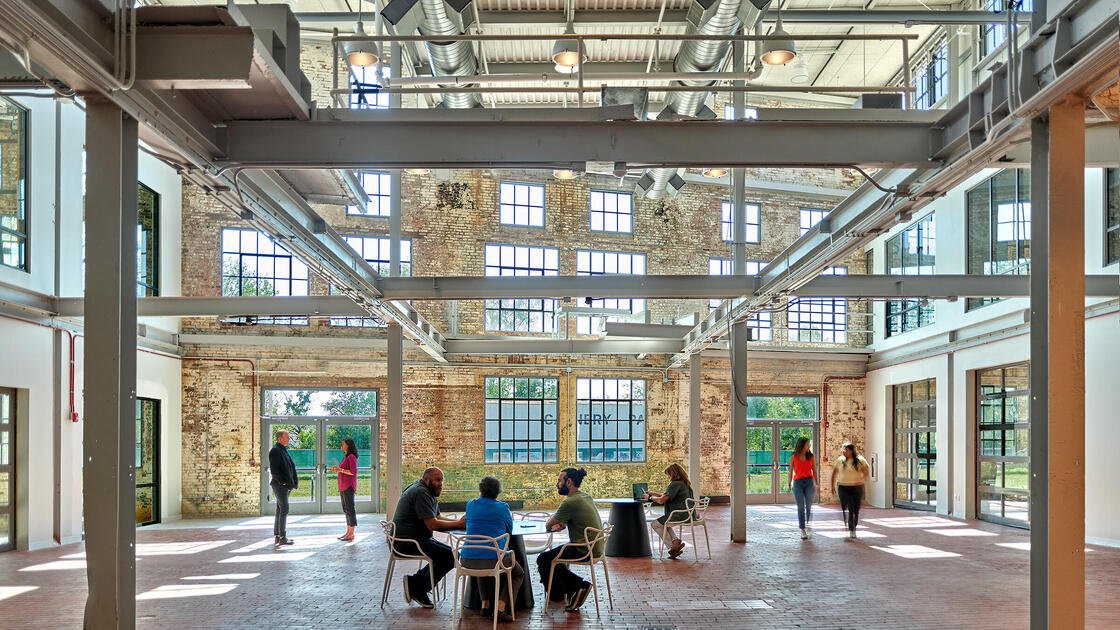
Old brick keeps its secrets until a crew opens the wall. A plaster ceiling may hide a timber frame that has been carrying more than anyone calculated, a boarded window may have a rotten sill, and a mechanical chase on the drawings may turn out to be a coal chute. Renovation and adaptive reuse are the work of making an existing building serve a new purpose, and the best of it begins with learning what is actually there.
General Contractors of Edmond renovates and repurposes older commercial, institutional and industrial buildings in the Oklahoma City and Edmond metro: warehouses turned into restaurants and offices, retail space converted to clinics, older schools and civic buildings brought up to current standards, and historic structures where the exterior has to stay the way it is. We investigate before we price, hold a contingency for what we cannot see and keep the owner informed as each discovery is made.
These projects sit at the intersection of code, preservation and construction. We design the schedule around approvals and storm season, and we tell owners early what the city and any preservation review will ask, because they usually ask for more than a new building would.
Metro Buildings With a Past
Oklahoma City has plenty of material. Bricktown is a former warehouse district of about 50 city blocks just east of downtown, and its first brick buildings appeared between 1898 and 1903. The Chickasaw Bricktown Ballpark opened in 1998, the Bricktown Canal in July 1999, and the Oklahoma City Streetcar loop through the district in December 2018. The district shows what reuse can accomplish when buildings that began as warehouses become restaurants, offices and hotels.
Farther afield, the Guthrie Historic District was listed on the National Register of Historic Places on June 13, 1974 and designated a National Historic Landmark on January 20, 1999, and Wikipedia says it includes 2,169 buildings. In Edmond, Old North Tower, the first building constructed on the University of Central Oklahoma campus in summer 1892, was listed on the National Register of Historic Places in 1971. Buildings with that standing, in places like Guthrie, call for a contractor who can work to preservation guidelines.
Investigation Before Pricing
We start with a survey of the existing conditions: the structure, the envelope, the mechanical and electrical systems, the fire protection and the presence of hazardous materials. Sampling for asbestos and lead paint is typically required before demolition or disturbance, and abatement, if needed, must be complete before general work begins. Structural engineers examine floors, roofs and walls, and we open selected areas to verify what the drawings suggest.
The result is a condition report and an allowance for unknowns. Old buildings almost always contain surprises, and an honest contingency saves a renegotiation later. When the site is something like the 60 acres of the Oklahoma National Stockyards, described in a November 2024 report as part of a 102-acre property being put up for sale, the question is not only what is there but what the buyer intends to do with it, and the answer drives the scope of investigation we recommend in Stockyards City.
Existing Building Codes and Reviews
Existing buildings are reviewed under rules that recognize they were built to earlier standards. The City of Oklahoma City lists the 2018 International Existing Building Code among its adopted codes, and that code offers compliance paths that scale requirements to the extent of the work. Choosing the path is a design decision with large cost effects, and we help owners compare them.
Historic buildings may also face review by preservation bodies, particularly if tax credits are involved. Review can affect window replacements, storefronts, masonry repair and interior finishes, and approvals take time. We prepare mockups and cut sheets to speed it. Accessibility is another focus: the City of Edmond lists ADA Accessibility Guidelines 2010 with ANSI A117.1 2009 among its adopted standards, so ramps, lifts and restrooms are reviewed in a renovation just as in a new building.
Opening, Repairing, Reinforcing
Demolition in a renovation is selective. We remove what the plans call for and protect what must remain, and we shore floors and walls where loads change. Masonry may need repointing, lintels may need replacement and a new opening in a bearing wall requires a header and temporary support, all installed in a sequence the engineer approves.
New systems must find their way into old spaces. Ductwork and sprinkler lines compete with beams and ceilings, and electrical panels need rooms that did not exist. We coordinate those routes on a model or full-size mockups so the trades do not discover the conflict at the ceiling. Where a building is part of a larger site, our demolition practice handles the portions that need to go, and our phasing approach keeps neighbors in operation.
Where Renovation Budgets Move
Costs in a renovation concentrate in three places: structural repair, building envelope and systems. A roof that leaks, a foundation that has settled or a floor that cannot carry the new use can each consume the contingency. Hazardous material abatement is the other large item, and the quantity cannot be fully known until the building is opened.
Against those costs sits the value of reuse: existing structure, shorter construction time in some cases, an address with character and sometimes tax incentives. Owners considering a project should ask whether the building is worth saving, and we can answer with numbers. Developers weighing a conversion can learn more at our page for commercial real estate developers, and owners of older office buildings often ask us about repositioning.
Hazards Specific to Old Buildings
Old buildings bring hazards: unstable floors, concealed openings, deteriorated masonry, lead paint, asbestos-containing materials and unknown utilities. We assess each before crews work in an area, require protective equipment, restrict access to unsafe zones and install shoring before removing support.
Fire protection during construction deserves attention because old timber and dry finishes burn quickly. We keep hot work permits strict, maintain extinguishers and a fire watch, and coordinate with the fire authority. Neighbors in older districts often share walls, so we notify them before demolition or vibration-causing work.
Walk the Building With Us
Invite us to walk the building before you buy or design, and we will tell you what we see, what it may cost and which questions to answer before you commit.
Common Questions
Is renovation cheaper than new construction?
Sometimes, but not always. Reuse saves structure and sometimes time, yet unknown conditions can erase the savings. We compare both options with real numbers and show where the risk lies.
What is the biggest surprise in older buildings?
Hidden structural deterioration and hazardous materials are the most common, along with outdated electrical systems. A thorough investigation reduces surprises but does not eliminate them, so we carry contingency and report discoveries promptly.
Do historic tax credits slow the project?
They can add review steps and documentation, and they may restrict materials and methods. For many projects the credit is worth it. We plan the review into the schedule and keep records the reviewers expect.
How do you handle a building that must stay open?
With phasing, barriers and clear communication. We schedule noisy work off hours, protect entrances and maintain life safety. The approach we use is described in our occupied site practice.
Which code applies to a renovation?
The adopted existing building code or the building code with its existing-building provisions, depending on the jurisdiction. Oklahoma City lists the 2018 International Existing Building Code, and we confirm the edition and compliance path with the building official for each project.
Related
Related Services
Related Building Types
Related Service Areas
Ready to talk about your project?
More General Contracting Services
Commercial Construction
Commercial construction in Edmond and the Oklahoma City metro, with permit.
Office Building Construction
Office building construction in Edmond and Oklahoma City: hail-ready envelopes.
Retail and Shopping Center Construction
Retail shopping center construction across Edmond and the Oklahoma City metro.