Overview
Phased construction on occupied sites in Edmond and Oklahoma City: hospital and retail additions, infection control, barriers, utility shutoffs and access.
Project Details
Category
Area
- Edmond and the Oklahoma City metro
Next step
General Contracting Services
Phased Construction on Occupied Sites in Edmond and OKC
Occupied buildings keep their own schedule, and a builder who forgets that will hear about it from the people inside. A clinic has appointments booked weeks ahead. A store has a holiday season. An office has a lease that says the tenant must have access to the loading dock between certain hours. Construction in or beside a building like that is not simply building, it is building around somebody else's day.
General Contractors of Edmond builds additions, renovations and site work for occupied hospitals, medical plazas, retail centers, schools, offices and apartment communities in the Oklahoma City and Edmond metro. We break the work into phases the occupants can live with, separate the work zone from the live zone with barriers and controlled access, and keep the people who use the building informed about what will be noisy, dusty or blocked on a given day.
Phasing is a design problem as much as a field problem. We try to join the project early enough to shape the phases, because the best sequence is often the one that follows from how the building is used and not from how the drawings are numbered.
Planning Around the People Inside
The first meeting with an occupied owner is about operations, not construction. We ask when the busiest hours are, which spaces cannot lose power or water, where deliveries arrive, where staff park and which routes patients, customers or residents take. The answers become the constraints in the phasing plan.
Healthcare is the clearest example. Edmond's 2025 financial report, as summarized on Wikipedia, lists top employers that include Integris Health Edmond with 580 employees, Mercy Edmond with 578, OU Health Edmond Medical Center with 436 and Summit Medical Center with 252. A Journal Record article from February 2019 reported a $62 million, 143,000-square-foot Integris addition on the I-35 corridor, described as doubling the hospital's size and the city's largest-ever addition permit. Work on that scale, next to an operating hospital, requires infection control, vibration limits and careful routing, and we plan those from the first day.
Dust, Noise, Egress and Infection Control
Safety in an occupied building has two audiences: the construction trade partners and everyone else. Barriers must be tight, floor to deck where required, and sealed against dust. Negative air machines, sticky mats, daily cleaning and protected corridors are standard in healthcare and are good practice in other uses. We keep egress paths open, maintain fire alarm and sprinkler coverage, and coordinate any impairment with the fire authority and the building owner in advance.
Noisy work such as demolition, coring and drilling for fasteners is scheduled for off hours when the owner can accommodate it. We give tenants and staff notice before shutting off utilities, and we do shutoffs at the time the owner approves, with a written plan for restoring service. Our pages for healthcare construction and healthcare systems go further into the protocols hospitals expect.
What Phases Look Like
A typical phased project begins with enabling work: temporary partitions, relocated utilities, protected paths and sometimes a temporary entry. The first phase of permanent construction then takes place in the vacated or newly built area, the occupants move into it, and the vacated area becomes the next phase. A retail center might repave a third of its lot at a time. A medical office might renovate one suite floor by floor.
Each phase has its own inspection and often its own temporary certificate of occupancy, so the building official has to understand the plan. We prepare phasing drawings that show barriers, exits, utility shutoffs and temporary signage, and we review them with the inspector before work starts. For tenant-focused work, tenant improvements follow a similar logic on a smaller scale.
Deliveries, Roads and Rail
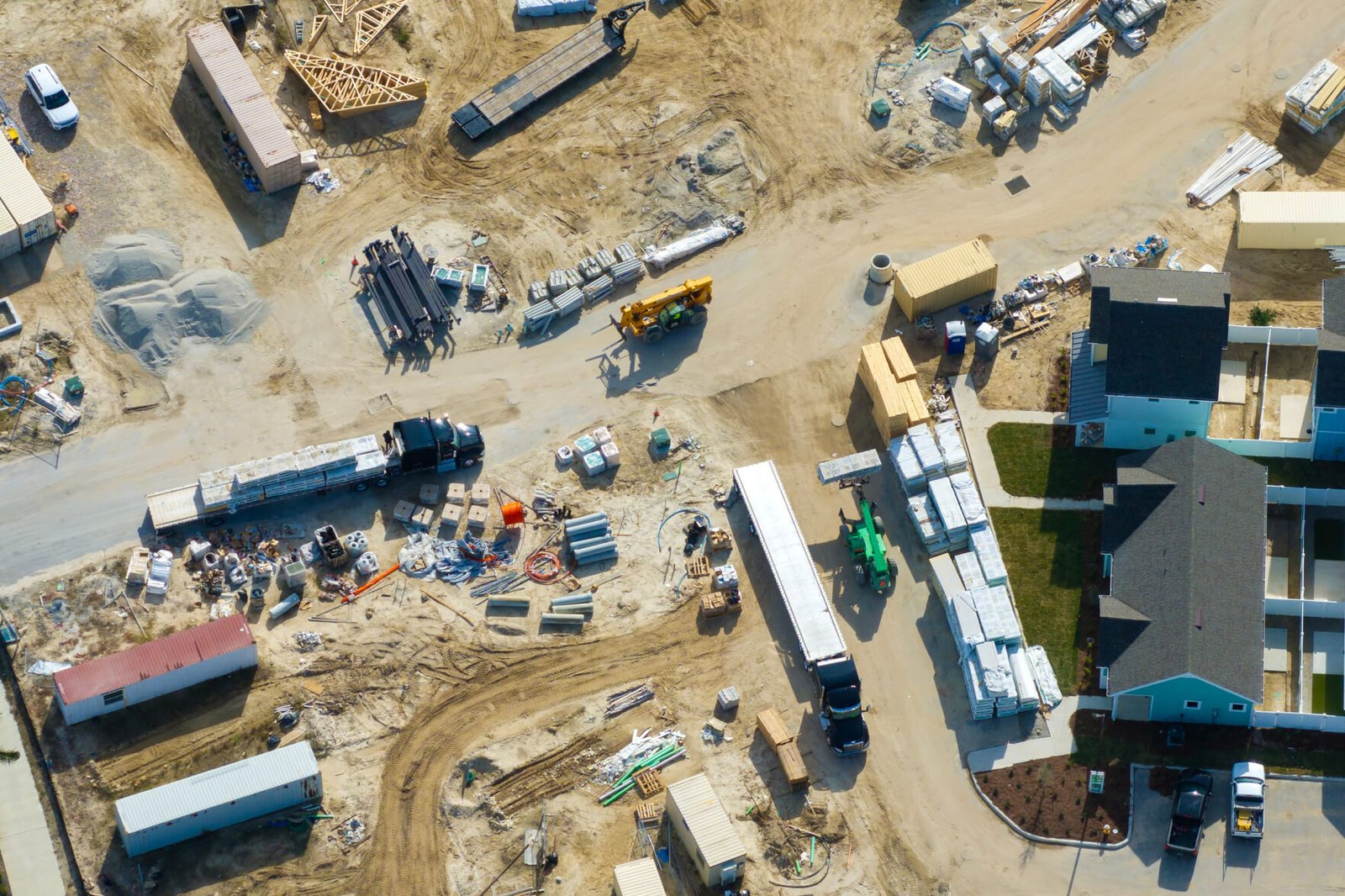
Getting materials to an occupied site is its own puzzle. We schedule deliveries outside peak hours, stage materials off site when space is tight and use small loads when large trucks cannot reach the work. City road and rail work can interrupt even the best plan. The City of Edmond announced in August 2026 that BNSF Railway maintenance would close the Main Street crossing from August 18 to 25 and the 33rd Street crossing from August 19 to 26, with the schedule subject to change.
When crossings or arterials close, trucks reroute, and a delivery that took twenty minutes can take an hour. We watch for such notices and shift schedules before they cause a missed pour or a late crane. At Town Center Plaza in Midwest City, a 100,000-square-foot former department store space was expected to be taken over by a furniture retailer; projects like that are common in the metro, and the center usually stays open around them.
Why Edmond Owners Phase Instead of Shut Down
Owners here usually cannot afford to close. Hospitals, schools and shopping centers serve their communities every day, and the costs of a shutdown can exceed the savings of a faster job. The better path is to keep serving customers while building, and that requires a contractor that treats the occupants as partners.
The same habits carry into our renovation and adaptive reuse work, into medical office buildings and into shopping centers in places like Midwest City. The common thread is that communication matters as much as construction: a weekly look-ahead sent to the occupants prevents more complaints than any barrier does.
Describe Your Building's Busiest Hours
Tell us who is in the building, when they need access and what cannot be interrupted, and we will propose a phasing plan, a schedule and a way to keep your occupants informed.
Common Questions
Does phasing cost more than closing the building?
Usually the construction costs somewhat more, because of barriers, off-hour work, temporary utilities and slower production. But the total can be lower once lost revenue, relocation and tenant concessions are counted. We price both options when an owner is deciding.
How do you control dust in a hospital or clinic?
We use sealed barriers, negative air, protective mats, HEPA filtration and daily cleaning, and we follow the owner's infection control risk assessment. The infection preventionist usually approves the plan and may inspect it during the work. We stop and correct anything that fails.
Can utilities be shut off without disrupting business?
Sometimes through temporary connections, bypasses or work at night. Where a shutoff is unavoidable, we agree on the time, notify occupants and prepare everything in advance so the interruption is as short as possible. Fire protection impairments are coordinated with the fire authority.
What if the schedule slips during a phase?
The delay affects the occupants more than usual because a vacated area may need to be reoccupied by a set date. We build float into each phase, keep a recovery plan and communicate early. If a phase will run late, the owner hears it from us first.
Who decides how to phase the work?
The owner and design team set the constraints, and we propose a sequence that meets them. The building official reviews the plan if egress or occupancy changes. We encourage owners to include us early so the drawings reflect how construction will actually proceed.
Related
Related Services
Related Building Types
Related Industries
Ready to talk about your project?
More General Contracting Services
Commercial Construction
Commercial construction in Edmond and the Oklahoma City metro, with permit.
Office Building Construction
Office building construction in Edmond and Oklahoma City: hail-ready envelopes.
Retail and Shopping Center Construction
Retail shopping center construction across Edmond and the Oklahoma City metro.