Overview
Historic masonry restoration, tenant conversions and new highway-side buildings in Guthrie, with preservation review and I-35 access planned from the start.
Project Details
Category
Area
- Edmond and the Oklahoma City metro
Next step
Service Areas
General Contractor in Guthrie, Oklahoma
Alterations to a brick storefront in a protected district are won or lost in the first month, and that is the kind of work we are ready for in Guthrie. Owners here tend to fall into two groups: those restoring or adapting older masonry buildings, and those who want something new and efficient near I-35 without the pace of the metro core. We build for both, and we tell each one early which approvals, which inspections and which material choices are likely to decide the budget.
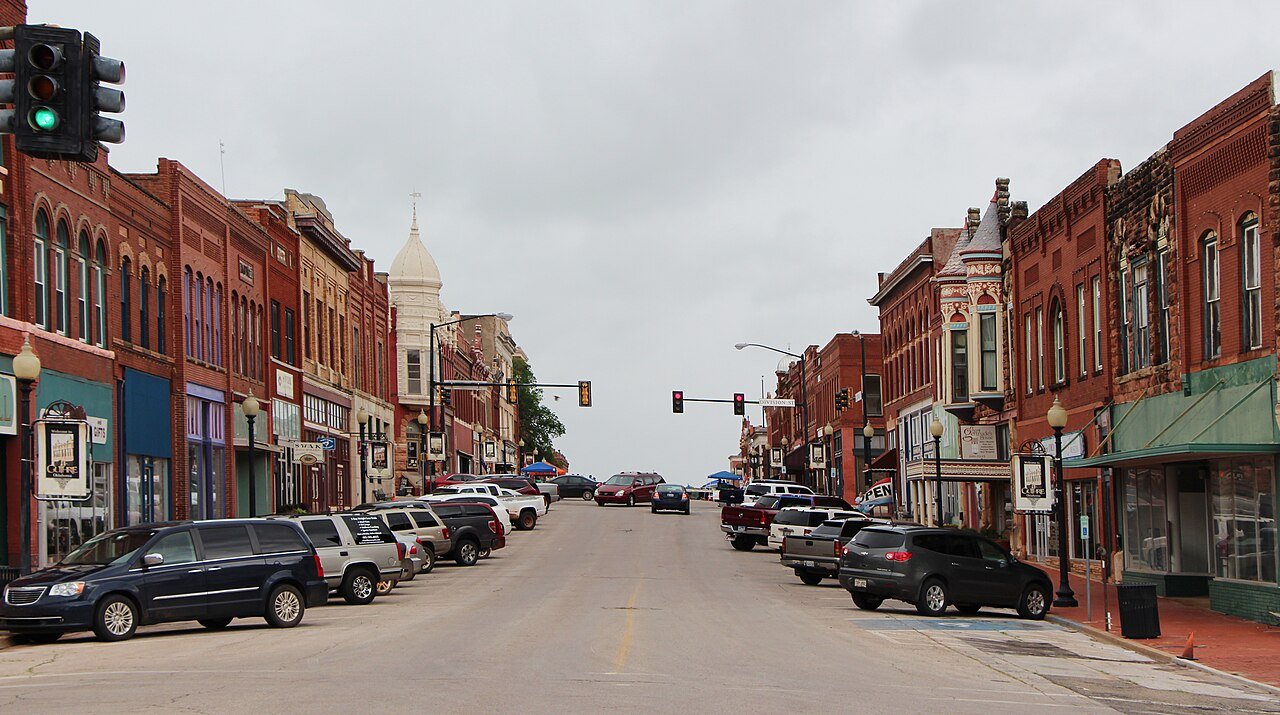
The historic side is the one that surprises newcomers. Wikipedia says the Guthrie Historic District was listed on the National Register of Historic Places on June 13, 1974 and designated a National Historic Landmark on January 20, 1999, and that it includes 2,169 buildings; the same article describes Guthrie as Oklahoma's first state capital in 1907. For a contractor that history means original brick, parapets, cast-iron storefronts and wood floors that cannot be treated as ordinary demolition debris. We scope the work as careful repair and adaptive reuse first, and as replacement only where the structure or code leaves no alternative.
Codes, review and the question of which edition
Oklahoma sets minimum statewide codes through the Oklahoma Uniform Building Code Commission, which adopted the 2024 editions of the International Building Code, International Fuel Gas Code, International Mechanical Code, International Plumbing Code and International Residential Code, with Oklahoma amendments, effective September 14, 2026. Cities then list their own editions, and some cities in the metro still list older ones on their own pages. We confirm with the local building department which edition governs a given permit date before a drawing is finalized, and we tell the architect when a change in edition affects egress, accessibility or energy provisions.
For work in a designated historic area, the code review is only part of the process. Exterior changes, signage and storefront alterations may also go through preservation review, which takes time and has its own submittal requirements. We build that review into the preconstruction schedule through our permitting and entitlements support and advise owners to talk to the city early, before they commit to a tenant opening date.
What older masonry buildings hide
Every owner of an older building wants to know what is behind the plaster. Typical findings include a failed parapet, a roof that has been patched in layers, floor framing that has been cut for old plumbing, and electrical systems that predate current load assumptions. We open up a controlled test area during estimating so that those conditions become allowances and not surprises, and we document what we find with photographs the owner can share with an engineer or an insurer.
Structural stabilization comes first, then weather-tightness, then systems and finishes. The trade partners for renovation and adaptive reuse match mortar to the original masonry instead of using a hard modern mix that damages soft brick, and they keep salvaged materials such as doors, trim and pressed-metal ceilings segregated for reuse. That discipline costs a little more during demolition and saves a good deal at finish.
How we sequence a tenant or owner conversion
The usual conversion in a historic downtown is a ground-floor retail or restaurant tenant with offices or apartments above. We start with life-safety: egress, fire separation between floors and a sprinkler or alarm strategy that the local fire official will accept. Then we handle accessibility, because a street entrance on an older building may sit at a different elevation than the sidewalk and require a ramp or a lift detail that changes the facade.
Once those pieces are settled, the tenant finish moves fast. Our tenant improvement teams coordinate kitchen equipment, storefront glass and signage as a package, and they reserve inspection dates before the electrical rough-in is complete. Owners who commit to that sequence usually open weeks sooner than those who negotiate each piece separately.
New buildings along the I-35 side
Not everything in Guthrie is historic. Wikipedia describes I-35 in Logan County as entering at milepost 146 with exits at Waterloo Road (146), Seward Road (151), US-77 north at Guthrie (153) and SH-33 at East Noble Avenue (157), and says the I-35 section from Edmond to Guthrie opened in 1960. Highway-oriented parcels near those exits suit fuel and convenience stops, small retail strips, self-storage and light-industrial buildings, and we build self-storage facilities and metal-framed shop buildings with the same attention to drainage and truck access that we give larger projects.
The Guthrie News Page reported on March 31, 2016 that King Nail would occupy 35,000 square feet in the Stewart Industries Industrial Complex with over 40 personnel and that Cimarron Aerospace would add 20 personnel, for about 60 jobs. That announcement is several years old, so we treat it as a sign that small industrial and aerospace-related tenants have looked at the town, not as a forecast. Developers working through commercial real estate developers tend to ask the same question about any small town, which is whether a tenant will come. If you are considering a similar flex building, our flex and light industrial scope shows what we usually include.
Scheduling for weather and the small-town labor pool
A project in Guthrie draws trades from the Edmond side of the metro (the same crews we use in downtown Edmond) and from north along the interstate, so we plan crew arrivals around the commute and keep a firm delivery calendar. Masonry, roofing and exterior work are timed for the drier months, and we try to close the building envelope before the spring storm season so interior trades can work in comfort.
Long-lead items in older buildings are usually windows, storefront and custom millwork, and we order those as soon as measurements are confirmed. We also build a buffer into the schedule for city review, for unexpected structural findings and for inspections, which can be slower in a small office when several projects are active at once. Owners who set the opening date after the review plan, instead of before it, tend to meet it.
Airport proximity and site safety
The Guthrie-Edmond Regional Airport has one concrete runway, 16/34, measuring 5,001 by 75 feet, on 411 acres 2 nautical miles south of Guthrie and 7 miles north of Edmond, according to Wikipedia. Owned by the City of Guthrie and operated by both cities from 2005 on, it is a reminder that cranes, tall equipment and some construction lighting near an airfield may need to be reviewed before they go up. We ask early whether a project falls within an approach path and coordinate any notice that the airport or aviation authorities require.
On every project we keep a site safety plan that fits the building: shoring and bracing plans for old masonry, fall protection at parapets and temporary protection for pedestrians on historic sidewalks. We also schedule deliveries to protect the district's streets, which were not designed for large trucks. Neighbors notice well-run jobs, and they notice poorly run ones faster.
Talk to us about a Guthrie building
Tell us whether the building is historic or new, who the tenant will be and when you hope to open. We will outline reviews, structure, systems and a schedule that respects them.
Common Questions
Do I need special approval to remodel a building in the Guthrie Historic District?
Often you will. Exterior changes, signage and storefront alterations in a designated area can go through preservation review in addition to the building permit. We ask the city early which reviews apply and fold that time into the schedule.
Will you repair original brick or replace it?
We repair first. Matching mortar and replacing only failed units keeps the character of the building and usually costs less than wholesale rebuilding. Where the structure is unsafe, we propose engineered stabilization and show the owner the alternatives.
How do you deal with unknown conditions in an older building?
We open a limited test area during estimating, photograph what we find and carry allowances for the rest. A change order is still possible, but it is rarely a surprise. Owners also get a record that they can show to lenders or insurers.
Can you build new construction near the interstate exits?
Yes. We build fuel and convenience pads, small retail, storage and light industrial buildings with the site work they need. We confirm zoning, utility availability and curb-cut approval first, since access to a state highway can require separate review.
Does the nearby airport affect my project?
It can. The Guthrie-Edmond Regional Airport sits 2 nautical miles south of Guthrie and 7 miles north of Edmond, according to Wikipedia, so height, lighting and crane use may need notice or review. We check this during preconstruction and coordinate any filing with the owner.