Overview
Building automotive and EV plants in the Edmond and Oklahoma City metro: steel and slab design, utilities, code editions, site readiness and schedule.
Project Details
Category
Area
- Edmond and the Oklahoma City metro
Next step
Building Types
Automotive and EV Plant Construction in Edmond and Oklahoma City
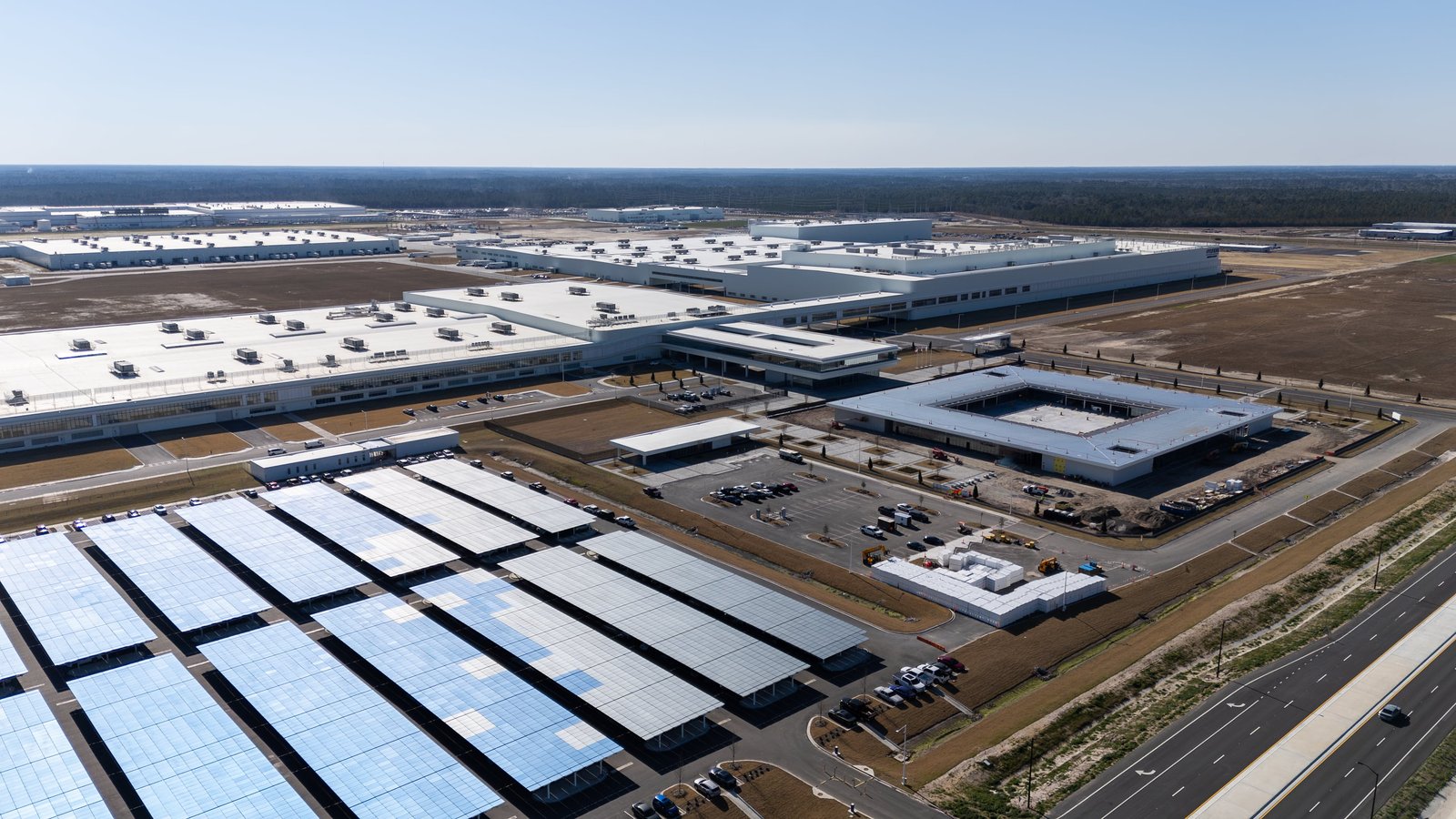
Vehicle, battery and drivetrain plants are judged on throughput long before anyone judges them on appearance, and the building has to be designed backward from the line. Body shops want clear height and bridge cranes or overhead conveyors, paint and coating areas want tightly controlled air, battery work wants dry rooms and heavy electrical service, and final assembly wants a flat, wide floor that stays flat under tooling and tugger traffic. We turn that process list into a shell, a slab and a utility package the city will permit.
The Oklahoma City and Edmond metro has the pieces that a plant of this kind leans on. In Oklahoma City, an 845,000-square-foot military engines facility opened beside the air force base in October 2024 with a $255 million price, and in Norman a 900,000-square-foot rooftop equipment campus added almost 400,000 square feet of laboratory and manufacturing space. Neither is a vehicle plant, but both show what heavy, power-hungry, high-bay manufacturing looks like when it is built and permitted here.
From our base in Edmond we plan these jobs around three realities: a utility service that is usually the longest lead on the schedule, a site that has to be certified or at least fully serviced before steel is ordered, and a storm season that shapes when the roof and the walls can go on.
Steel, panels and the floor under the line
An automotive or EV plant usually starts as a very large, very simple box and then gets complicated from the inside. The structure is typically structural steel or a tilt-up panel shell on a regular column grid, with bay widths sized to the conveyor and tooling layout rather than to the cheapest joist span. The trade partners for structural steel erection coordinate crane rails, mezzanine framing for process piping and roof openings for rooftop makeup air units before the steel is detailed, because adding any of those after erection means field reinforcement and delay. Where an owner prefers panels, the tilt-wall building approach can carry the same footprint with fewer joints and a stiffer envelope, provided the panel pick sequence works around the equipment pits.
The slab is the other half of the scope. Assembly lines, press foundations and battery handling zones put point loads, vibration and thermal cycling into a floor that also has to hold flatness tolerances for automated guided vehicles. We design joint layouts, reinforcement, vapor barriers and curing procedures with the slab engineer and the equipment vendor at the same table, and we place heavy foundations and trenches first so the large floor pours run uninterrupted. The trade partners for concrete foundations sequence pits and equipment pads ahead of the main pour.
Hazard classes, code editions and the plan review
A plant's plan review is mostly about use classification and fire protection, not about appearance. Paint, solvent, battery and chemical storage areas can push parts of the building into higher hazard classifications, which changes separation walls, sprinkler density, ventilation and the allowable area of the whole shell. In Edmond, permits applied for or issued on or after August 14, 2023 fall under the 2018 International code family and the 2020 National Electrical Code, and the city's own page calls that adoption consistent with the state's minimum codes. In Oklahoma City the listed set is the 2018 International Building Code and the 2017 National Electrical Code, with the 2009 energy code, each with city amendments.
The state commission adopted the 2024 editions of the International Building, Mechanical, Plumbing, Fuel Gas and Residential Codes with Oklahoma amendments effective September 14, 2026, while the cities above still list older editions on their own pages. On a plant that may be designed in 2026 and permitted in 2027, that gap is a real planning item. We ask the building department which edition governs the specific permit, put the answer in writing in the preconstruction notes, and price accordingly. Edmond's local ordinances also include a title on power generation and storm shelters, so onsite generation or shelter space gets checked before the layout is frozen.
Where a plant site can actually be found in this metro
Site choice does more for a plant schedule than any other single decision, and the metro has examples of how to buy time. A 30-acre advanced manufacturing site in north Norman just off Interstate 35, with lots of four to 15 acres and all utilities available, earned the state's Site Ready certification in July 2020, the first Norman site to do so under the updated program. Certified, serviced land shortens early diligence on water, sewer and power.
In Edmond, the city's economic development authority names I-35 and Covell, 2nd Street, Broadway and Downtown as its key corridors, and the city's publicly owned electric utility is a useful starting point for a power conversation. For an owner comparing parcels, we also weigh the ground described on our Norman research park page before a commitment. Highway access matters too: the John Kilpatrick Turnpike runs 31 miles entirely inside Oklahoma City limits and meets Interstates 35 and 44, which suits inbound parts and outbound finished units.
Crane picks, ground motion and storm days
Plants hold more people, more moving equipment and more energy than most buildings we build, so the safety plan has to be written before mobilization. We stage deliveries to keep heavy equipment away from people, cover open pits, and hold daily coordination meetings when trades overlap before dry-in.
The ground adds its own question. The Oklahoma Geological Survey reported at least six earthquakes near Edmond in mid-January 2024, two of them above magnitude 4. For precision machining or press lines, that is a design input for foundation isolation, not a reason to look elsewhere; the structural engineer specifies anchor bolts and we verify embedment and torque. Storm exposure is the other recurring risk: the May 16, 2010 hail supercell moved through the heart of the metro including Edmond, and we plan roofing, glazing and rooftop equipment curbs for hail and high wind, with a shelter plan for the crew on every active day.
Power, long lead gear and total delivered cost
The cost of a manufacturing plant is dominated by things that are not the building: the utility service, the process equipment foundations and the long lead items. A transformer or switchgear order can set the completion date regardless of how fast the shell goes up, so we raise long lead procurement in the first estimate and ask for vendor lead times in writing. Our site development and utilities group prices detention, truck courts and earthwork against a geotechnical report rather than a lump allowance.
Owners who are comparing several parcels should compare total delivered cost, not the building number alone. Smaller suppliers often choose a metal building shell with a conventional slab upgrade where the process needs it, and keep the heavier structure for the main line. Manufacturers can read how we handle equipment-set milestones on our manufacturing client page.
Test a plant site before you commit to it
Send us the process list, the target start date and the parcels under consideration. We will return a test-fit, a utility question list for the city and a rough order of magnitude so the land decision rests on real numbers.
Common Questions
Does the Edmond area already have vehicle or EV plants?
Not in the facts we rely on, and we will not claim otherwise. What the metro does have is large, high-power manufacturing, including an 845,000-square-foot military engines facility beside the air force base and a 900,000-square-foot rooftop equipment campus in Norman. Those show the permitting, utility and workforce patterns an automotive or EV supplier would meet here. We use them as comparisons rather than as proof of a local vehicle cluster.
Which code edition will my plant be reviewed under?
It depends on the jurisdiction and the date of the permit application. Edmond lists the 2018 International code family and the 2020 National Electrical Code for permits applied for or issued on or after August 14, 2023. Oklahoma City lists the 2018 International Building Code and the 2017 National Electrical Code. The state adopted 2024 editions effective September 14, 2026, so we confirm in writing with the building department before pricing.
How much land do I need for a supplier plant?
That depends on the process, but a useful reference is the certified north Norman site, which offers lots of four to 15 acres with all utilities available. A supplier with truck traffic needs the building, a truck court, employee parking and detention, and the last two are often underestimated. We test-fit the layout against the lot in preconstruction before you commit to a purchase.
What controls the schedule on a plant?
Electrical service and long lead equipment almost always control it, followed by the weather during the dry-in window. Steel or panel erection moves quickly once foundations are in, but switchgear, transformers and process utilities can take longer than the shell. We order early, track every submittal and plan roofing for hail season.
Related
Related Services
Related Building Types
Ready to talk about your project?
More Building Types
Warehouse Construction
Warehouse construction in Edmond and the Oklahoma City metro: South Kelly.
Distribution Center Construction
Distribution center construction for the Edmond and Oklahoma City metro: dock.
Manufacturing Plant Construction
Manufacturing plant construction in the Edmond and Oklahoma City metro.