Overview
Site development, retail, hotel and employment construction at Yukon interchanges along I-40, with grading, detention and utility work delivered first.
Project Details
Category
Area
- Edmond and the Oklahoma City metro
Next step
Service Areas
General Contractor in Yukon, Oklahoma
Pad sites at an interchange only sell when the road, the water and the sewer arrive together, and the builder's job is to make sure the site work is finished before the tenant's lease clock starts. We build retail centers, hotels, restaurants, medical offices and small employment buildings on the I-40 corridor in Yukon, and we start with the dirt: grading, detention, utility extensions and the access drives that make the pads usable.
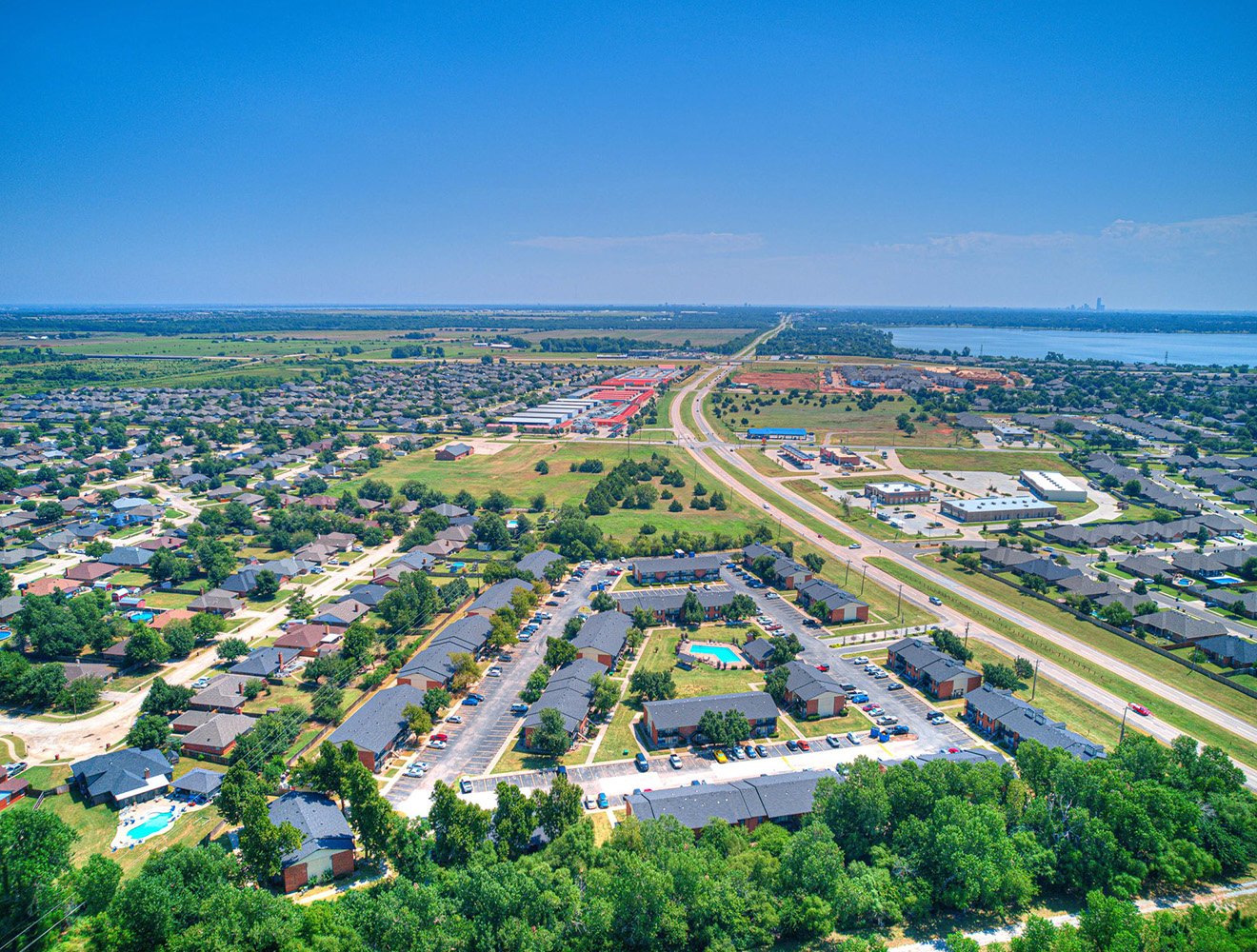
Yukon's growth is tied directly to the interstate. The city's Increment District No. 1, created March 4, 2014 with $37,000,000 in authorized project costs, covers an undeveloped area mostly south of I-40 between Garth Brooks Boulevard, Health Center Parkway and a newer interchange to the west, and it was designed to fund that interchange as a catalyst for retail, hotel and employment development. The exit, number 134 on the interstate, opened in August 2021, so the road framework is now in place even though many of the surrounding acres may still be open.
For a developer or a national tenant, that means a market where infrastructure has moved ahead of buildings. We help owners decide what to build first, how to phase it and which tenants make the first pad pay for the second.
Site development for interchange land
Raw acreage becomes buildable ground through a sequence we manage carefully. We strip topsoil and stockpile it, cut and fill to the design grades, compact in lifts with testing, install storm sewer and detention, extend water and sanitary lines, place conduit for power and communications, and pave the drives and parking. Each step is documented because lenders and cities will ask for the records. The trade partners for site development and utilities and stormwater drainage handle the work as one package.
Detention is often the largest earthwork item on open land, and it changes the shape of the lot. We prefer to settle the pond location and size with the city before pads are laid out, because moving a basin later can erase buildable area. Where the site slopes, we design the grading so building pads meet finished floor elevations without retaining structures where possible.
Pad-ready also means documented. When we deliver a pad, we hand over compaction results, as-built utility locations, survey monuments and the stormwater maintenance information the city will expect. A tenant's architect can then design foundations from facts instead of assumptions, and a lender's inspector can see that the site was built as drawn.
What sets the price of an interchange parcel
Three costs dominate. First is earthwork: how much soil must be moved, whether it is suitable and where excess goes. Second is the utility package: distance to the nearest main, required pump or lift capacity, and any off-site extension. Third is paving and access, including turn lanes, signals and driveway permits, which the highway agency may regulate. We give owners ranges early and tighten them as surveys and geotechnical reports arrive.
Public financing may help with some of these costs, which is why the tax increment district matters, but timing and eligibility are set by the city. We structure our cost reports to separate site, building and tenant items so an owner can match them to whatever reimbursement or financing rules apply. We never promise that costs will be reimbursed.
Traffic, highways and the trade area
A Greater Oklahoma City Chamber page for Yukon lists a traffic count of 55,200 vehicles per day at the I-40 and Garth Brooks Boulevard trade area, with retail sites available at that interchange; the page dates from 2016, so figures may be dated and should be checked with the state. Other exits in the area include Garth Brooks Boulevard (136), Cornwell Drive and Czech Hall Road (137) and SH-4 at Mustang Road and Yukon Parkway (138A).
Route 66 and State Highways 4 and 92 also run through Yukon, which sits just north of I-40 in Canadian County, and a public reference reports 23,630 residents in the 2020 census. The John Kilpatrick Turnpike, entirely inside Oklahoma City limits, passes just east of the Yukon city limits and meets I-40 at a full interchange, with the extension to I-40 completed in 2001. Together, these roads give retail and employment buildings in Yukon regional reach as well as local trade. For a neighboring market, see Mustang.
Traffic control and open-site safety
Working next to an interstate requires a traffic control plan, and the highway agency must approve any work in the right of way. We hire qualified flaggers and set up cones, signs and barriers to the plan. Within the site, we separate construction vehicles from pedestrians, keep haul roads watered to control dust and install silt fences and construction entrances so mud does not reach public streets.
Open ground also means exposure to weather. We watch forecasts for storms, secure loose materials and have a plan for sheltering crews. Erosion control is inspected after significant rain, because a storm permit violation can stop work faster than almost anything else. We also stay in touch with neighbors, particularly where new construction borders existing homes or businesses.
Working across the west metro
We serve Yukon from our Edmond base, and many owners also look at other locations in the metro. If you are comparing the west side with the north, our Oklahoma City page and our Edmond page describe those markets. Developers building retail often care about the retail chains that follow the interstate, and we can help line up prototype drawings and site requirements with their standards.
If you have a parcel under contract, send the legal description. We can provide a feasibility outline with grading, utilities and access issues, and a preliminary schedule so you can decide whether to proceed. For hotel or restaurant users, we can also discuss the sequence of pad delivery and building construction.
Have an interchange parcel in Yukon?
Send the legal description and the uses you are considering. We will return a feasibility outline covering grading, utilities, access and a first-phase schedule.
Common Questions
Does a tax increment district guarantee my site costs will be paid?
No. A district sets authorized costs and rules, but reimbursement depends on the city's agreements and on the tax revenue that the district produces. We organize records so owners can apply, and we advise talking to the city early.
How long does site work take on open interchange land?
Typically several months for a multi-pad site, depending on weather, soil, utility extension and approvals. A single pad can be quicker. We provide a schedule after seeing the grading plan and the utility letters.
Can you build a hotel and a restaurant pad at the same time?
Yes, if the site work is complete or phased properly. We usually deliver the pads first, then build the structures in an order that matches the owners' opening dates. Shared drives and utilities need to be finished before the first building opens.
Why is detention such a big deal?
Because paved areas shed water quickly, and the city requires that the flow leaving the site be controlled. The basin takes up land and affects layout, so it should be designed early. Moving it later can force a redesign.
How current are the traffic numbers for the Yukon exits?
The Chamber figure we have seen dates from 2016, so treat it as a starting point. For a lender or tenant, a current traffic count from the state or a consultant is better, and we can help you obtain one.