Overview
Distribution center construction in Edmond and the Oklahoma City metro: dock layouts, truck courts, traffic review, utilities and opening-date schedules.
Project Details
Category
Area
- Edmond and the Oklahoma City metro
Next step
General Contracting Services
Distribution Center Construction in Edmond and Oklahoma City
Interstates 35, 40 and 44 converge inside Oklahoma City, and a distribution operator reads that fact as a trucking map. Fewer hours between a dock and a customer, more reliable lanes in and out and a labor pool within a short commute are what a distribution center sells, and the building is only the container for that advantage. Our job is to make the container fit the operation exactly.
General Contractors of Edmond builds distribution centers across the Oklahoma City and Edmond metro for regional distributors, retailers, food companies and logistics providers. We design the schedule around approvals and storm season, and we tell owners early what the city will ask. On a distribution site, the answer often involves traffic study, fire access and utility capacity before it involves the building itself.
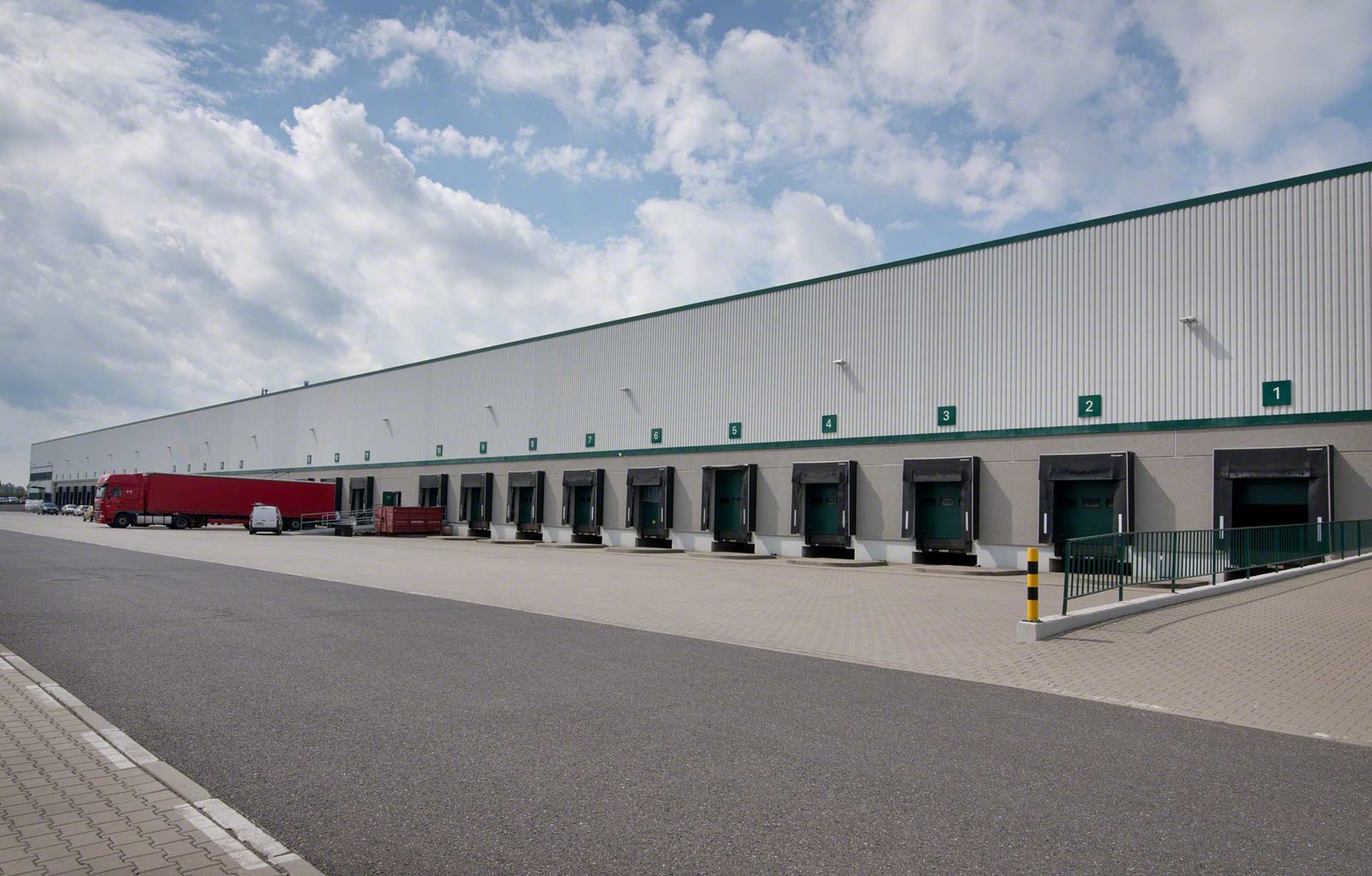
Distribution centers differ from simple warehouses in their throughput. The number of dock doors, the staging area at each door, the sortation equipment and the trailer yard make the building closer to a machine than to a storage shed.
Traffic, Fire and Utilities Come First
Review of a distribution project begins with traffic and fire. A large facility generates truck and employee trips that the city examines on the adjoining streets, and it needs fire lane access around the building. Oklahoma City lists the 2018 International Building Code and the 2018 International Fire Code among its adopted codes, and Edmond states that its 2018 codes apply to permits applied for or issued on or after August 14, 2023. The state adopted 2024 editions effective September 14, 2026, so we confirm which edition governs.
The second review is utilities. Distribution centers draw heavy electrical loads for lighting, conveyors and charging, and some need substantial water for fire protection. We request the capacity letters from the providers during site selection, since a lot with inadequate service can cost more to improve than a better-served lot costs in land.
Operators Already Betting on the Metro
Recent large operators have chosen Oklahoma City. The Oklahoma Department of Commerce posted that Amazon would build a 640,000-square-foot fulfillment center in south Oklahoma City expected to employ 1,750 people. In Tuttle, Braum's built a 260,000-square-foot processing plant on its farm and a 240,000-square-foot bakery and warehouse distribution facility next to it, with the company's headquarters in Oklahoma City.
The John Kilpatrick Turnpike, which is 31.0 miles long and lies entirely within Oklahoma City limits, runs from SH-152 and I-240 in southwest Oklahoma City to I-35 and I-44, and its southern extension opened in early 2020. For owners weighing sites, the practical lesson is that the metro offers several arterial routes around the city's core, which reduces the dependence on any single interchange.
Aprons, Courts and the Main Floor
Concrete is where a distribution center is won. Dock aprons carry the repeated impact of loaded trailers, and a failed apron slab is expensive to replace while the facility operates. We manage concrete work closely, including the truck court, dock positions, aprons and pavement, with doweled joints, proper subgrade and a drainage pattern that keeps water away from the doors. The truck courts and dock aprons page covers that work.
The main floor is the second major element. It supports rack, forklifts and sometimes automated vehicles that demand flatness. We coordinate with the operator's equipment vendor on tolerances, and we schedule pours so the slab cures properly before racking installation begins.
Trucks and People on the Same Site
Dock work has hazards of its own. During construction, heavy trucks move around the site, and we separate pedestrians from vehicles with barriers and signed routes. Truck drivers new to the site get an orientation, flaggers control the entry, and the haul route is posted at the gate. Concrete deliveries, crane picks and steel deliveries are scheduled to avoid overlapping, and we run a daily briefing for the site team.
When we build next to an operating facility, we also coordinate with the owner's safety staff. Shared roadways, fire lanes and emergency access must remain open, and we agree in writing how construction traffic and the owner's trucks will share space.
Where We Build Distribution Space
Our distribution work covers the whole metro. Owners in Oklahoma City usually need access to I-35, I-40 or I-44. Operators near Will Rogers International Airport sit beside Lariat Landing, whose tenants include Amazon, FedEx and SkyWest Airlines, and those in Edmond use the I-35 corridor to the north.
We also build for the logistics and distribution industry more broadly, from the fulfillment and logistics centers that serve e-commerce to the cold-storage buildings that serve food distributors. The distribution center page gives building-level specifics.
Opening Dates and Peak Seasons
Schedules on distribution projects are often driven by a lease date or a peak season. A building that opens a month late can miss the holiday volume that justified it. We work backward from the opening date, identify the long-lead items, and propose an acceleration plan if the early schedule slips. That may include early site packages, procurement of steel, overhead doors and dock equipment before the permit is finished, and overtime on critical activities.
Weather is the other variable. Rain delays site work, and hail or wind can damage materials stored on site. We store sensitive materials under cover, track forecasts and reserve float for storm season so the opening date is realistic.
Give Us the Opening Date
Tell us the opening date, the dock count and the site, and we will return a schedule that shows what has to happen first.
Common Questions
How many dock doors do we need?
It follows from throughput, the number of trucks per day and the time each stays at the dock. We ask for the operation's peak, size the doors and add provision for later expansion. Adding doors during construction is cheap, and adding them later is not.
What does a traffic study involve?
The city may ask for an analysis of the truck and employee trips the facility will generate and how the adjoining streets will carry them. The study often leads to turn lanes or signal changes. We raise it early so the owner can include the cost and time.
Can you build in phases while we operate?
Yes. We stage the work in sections with separate access, and we schedule tie-ins during planned shutdowns. The cost is longer duration, which is shown in the estimate.
What code editions apply to the project?
Edmond lists the 2018 International Codes for permits applied for or issued on or after August 14, 2023, Oklahoma City lists the 2018 International Building and Fire Codes, and the state adopted 2024 editions effective September 14, 2026. We confirm the edition with the building department.
What causes delays most often?
Utility service, long-lead dock equipment and permit comments are the usual causes. We address them with early requests, tracked deliveries and a prompt response to reviewers.
Related
Related Services
Related Building Types
Related Service Areas
Ready to talk about your project?
More General Contracting Services
Commercial Construction
Commercial construction in Edmond and the Oklahoma City metro, with permit.
Office Building Construction
Office building construction in Edmond and Oklahoma City: hail-ready envelopes.
Retail and Shopping Center Construction
Retail shopping center construction across Edmond and the Oklahoma City metro.